During the degree and the Minor, we have often discussed how important it is to use texts suited for the audience we intend to reach. I have come across a tool that can help in this sense, a website named "Analyze my writing", which gives a set of readability scores for any sample text you copy and paste into it. It offers details about the readability indices it includes and is very easy to use.
I have given it a try with a quite informal text for my self-assessment on a unit in the Minor, the autobiographical story I told a group of fourth-graders during the school placement, and with a sample from my dissertation, and the scores are quite different.
I think it can be useful to test the difficulty level of texts before taking them to the English class, as well as to check that we are producing the right type of texts for our most formal assignments, like the dissertation.
hizkuntzaren didaktika etiketadun mezuak erakusten. Erakutsi mezu guztiak
hizkuntzaren didaktika etiketadun mezuak erakusten. Erakutsi mezu guztiak
2015/04/27
2015/04/14
Ereindako hazitxo batekin topo
Atzo arratsaldean iloba zaharrenaren bila joan nintzen eskolara, ikasturtean lehen aldiz. Lau eta bost urteko gelan zegoenean bere eskolan egin nituen praktikak, ondoko gelan. Hortaz, atzo haur horietako batzuk ikusi nituen.
Bat gerturatu egin zitzaidan kasu egitera. Ez zuen nire izena gogoratzen hasieran, baina lehen silaba esan nionean etorri zitzaion burura. Sobra ere, nire izena ahaztu arren ni gogoratzen ninduela adierazi nahi zidan, eta honelaxe esan zidan: "zuk egun batean paper bat eman zenidan, eta luma bat zuen itsatsita, eta luma berdea zen", eta jarraitu zuen azaltzen, airean lauki bat marraztuz "honelako baten barruan liburua zegoen, eta horrek zituen lumak". Gero agur esan, eta lagunekin jolastera joan zen.
Aurreko ikasturtean ipuinaren tarterako egin nuen zorroaz ari zen haurra. Haur honek ez zituen ipuinak gustuko, ezta irakurri eta idaztea ere orokorrean. Lau urteko gelan zegoela iritsi zen eskolara eta aurretik ez zuen euskararekin harremanik izan. Ipuinetako hizkuntza zailegi egiten zitzaion ulertzen eta normalean deskonektatu ohi zuen. Ikasle bihurria zen, gainera; beste haurrekin eta irakaslearekin gatazka mordoa izaten zuen horietakoa. Berak eta beste batek ipuina gordetzeko zorroari lumak kendu zizkioten, eta haien apalean gorde zituzten. Baina horrelako sekretuak ezin dira luzean gorde gelan, eta beste haur batzuk azkar etorri zitzaizkidan bi gelakideek egindakoa. Lumak "konfiskatu" nizkien, baina berriro itsastea ez zen posible, eta haiekin positiboa zen zerbait egin nahi nuen. Horrela, erabaki nuen haur bakoitzari praktiken amaieran idatzi nien olerkitxoan itsatsiko niela luma bana. Lumak bildu zituzten biek jaso zituzten txikitxoenak.
Hori guztia gogoratu nuen atzo, haurrak ipuinen zorroa eta lumen kontua azaltzen zidan bitartean. Eta pentsatu nuen haur horrek ipuinak bere gustukoa izan zen zerbaiti lotzeko balio izan bazuen, merezi zuela ipuinen zorroa egin izana. Iruditzen zait norberak atseginez eta gogo handiz egindakoa besteengana iritsi ohi dela, eta horrek eragin positiboa duela.
Bat gerturatu egin zitzaidan kasu egitera. Ez zuen nire izena gogoratzen hasieran, baina lehen silaba esan nionean etorri zitzaion burura. Sobra ere, nire izena ahaztu arren ni gogoratzen ninduela adierazi nahi zidan, eta honelaxe esan zidan: "zuk egun batean paper bat eman zenidan, eta luma bat zuen itsatsita, eta luma berdea zen", eta jarraitu zuen azaltzen, airean lauki bat marraztuz "honelako baten barruan liburua zegoen, eta horrek zituen lumak". Gero agur esan, eta lagunekin jolastera joan zen.
Aurreko ikasturtean ipuinaren tarterako egin nuen zorroaz ari zen haurra. Haur honek ez zituen ipuinak gustuko, ezta irakurri eta idaztea ere orokorrean. Lau urteko gelan zegoela iritsi zen eskolara eta aurretik ez zuen euskararekin harremanik izan. Ipuinetako hizkuntza zailegi egiten zitzaion ulertzen eta normalean deskonektatu ohi zuen. Ikasle bihurria zen, gainera; beste haurrekin eta irakaslearekin gatazka mordoa izaten zuen horietakoa. Berak eta beste batek ipuina gordetzeko zorroari lumak kendu zizkioten, eta haien apalean gorde zituzten. Baina horrelako sekretuak ezin dira luzean gorde gelan, eta beste haur batzuk azkar etorri zitzaizkidan bi gelakideek egindakoa. Lumak "konfiskatu" nizkien, baina berriro itsastea ez zen posible, eta haiekin positiboa zen zerbait egin nahi nuen. Horrela, erabaki nuen haur bakoitzari praktiken amaieran idatzi nien olerkitxoan itsatsiko niela luma bana. Lumak bildu zituzten biek jaso zituzten txikitxoenak.
Hori guztia gogoratu nuen atzo, haurrak ipuinen zorroa eta lumen kontua azaltzen zidan bitartean. Eta pentsatu nuen haur horrek ipuinak bere gustukoa izan zen zerbaiti lotzeko balio izan bazuen, merezi zuela ipuinen zorroa egin izana. Iruditzen zait norberak atseginez eta gogo handiz egindakoa besteengana iritsi ohi dela, eta horrek eragin positiboa duela.
2015/02/28
IKTen eraginak haurren idazketan?
Graduan zehar ez dut ia denborarik izan ilobekin egoteko, eta ez ditut nahi adina ikusten. Hala ere, tarteka izaten gara batera, eta benetan ondo pasatzen dut orduan.
Joan den astebukaeran erabaki nuen aurtengo ikasturteko lehen astebukaera librea hartuko nuela (ia-librea, datorren asteazkenean izango dugun saioa prestatzeko ordu batzuk erabili nituelako), eta larunbata goiza sei urte dituen ilobarekin pasa nuen. Lehendabizi erosketak egitera joan ginen, gero gure etxera, han bazkaria prestatu eta bazkaldu ondoren kartetan ibili ginen pixka batean, bere etxera joan aurretik.
Erosketak egitera joateko, zerrenda berak idaztea proposatu nion, eta oso gustura egin zuen. Gustukoa du egiten dakiena erakustea, eta gogoz aritu zen. Hori bai, zumorako laranjetara iritsi ginenean pixka bat aspertuta zegoen jada, eta hori luzeegia zela eta kexati azaldu zen, baina bukatu zituen denak.
Zerrendako lehenengo gauza bi kilo patata ziren. Segituan galdetu zidan ea bi zenbakiz idatz zezakeen, hizkiekin izan ordez, eta esan zidan kilo adierazteko "k" idatziko zuela. Gauzak gehitzen joan ginen, eta zerrendak itxura hau hartu zuen:

Joan den astebukaeran erabaki nuen aurtengo ikasturteko lehen astebukaera librea hartuko nuela (ia-librea, datorren asteazkenean izango dugun saioa prestatzeko ordu batzuk erabili nituelako), eta larunbata goiza sei urte dituen ilobarekin pasa nuen. Lehendabizi erosketak egitera joan ginen, gero gure etxera, han bazkaria prestatu eta bazkaldu ondoren kartetan ibili ginen pixka batean, bere etxera joan aurretik.
Erosketak egitera joateko, zerrenda berak idaztea proposatu nion, eta oso gustura egin zuen. Gustukoa du egiten dakiena erakustea, eta gogoz aritu zen. Hori bai, zumorako laranjetara iritsi ginenean pixka bat aspertuta zegoen jada, eta hori luzeegia zela eta kexati azaldu zen, baina bukatu zituen denak.
Zerrendako lehenengo gauza bi kilo patata ziren. Segituan galdetu zidan ea bi zenbakiz idatz zezakeen, hizkiekin izan ordez, eta esan zidan kilo adierazteko "k" idatziko zuela. Gauzak gehitzen joan ginen, eta zerrendak itxura hau hartu zuen:
Piper berde batera iritsi zenean, esan zidan "berde" idatzi beharrean, margo berdea hartu eta orban bat egingo zuela. Gero, esan nion "litro" idatzi beharrean, nahi bazuen "l" idatzi zezakeela, kiloarekin egin zuen bezala. Bigarren aldiz dozena idaztera iritsi ginenean, galdetu zidan ea ez ote zegoen laburdura bat dozenarentzat, eta azaldu nion ezetz, baina nahi bazuen 2 x 12 idatz zezakeela. Biderkaketaren esanahia azaldu ondoren, esan zidan hori konplikatua zela, eta hitzez idazteari eutsiko ziola.
Deigarria iruditu zitzaidan hizkien ekonomiaren inguruko interesa, eta hitzak sinboloen bidez ordezkatzeko joera. Nik ez dut uste sei urterekin "berde" idatzi beharrean orban berde bat marraztea bururatuko zitzaidanik.
Bestetik, ez dut uste haur hau ezertan berezia denik. Nire ustez, IKTen eragina izan daiteke. Iloba ohitua dago bere gurasoen mugikorrak erabilita mezuak idaztera, eta hor oso ohikoa da hitzak ikonoekin ordezkatzea. Agian hortik datorkio ideia.
Azken batean, IKTek gure pentsamendua aldatzen dute, pentsatzeko modua bera, eta agian hau adibide bat izan daiteke.
2014/12/14
Third week of the school placement
This week felt a bit short, because I didn’t come on Monday due to the bad cold I have been suffering. Luckily, I am getting over it and I have been feeling better yesterday and today. Although I didn’t write about it last week, we have had a dysentery outbreak in the school for the last two weeks, and that has been quite an experience too, as it has given me the opportunity to observe how the school interacts with the Department of Health and how these matters are handled regarding communication with the families and so on. Apparently, things are under control and we will soon get rid of it.
Coming back to more particular matters, I will write a bit on group work in the English classroom. The English classroom has a fixed layout, with sets of 4-5 tables and chairs forming groups. So, children seat in groups. The teacher asks them to do some tasks (book exercises) in groups, especially when she thinks the task will be difficult to carry out on one’s own. Still, students tend to work individually and refuse to cooperate, sometimes very explicitly. The regular tutors for each class tell the English teacher that children are used to working in groups outside the English class, but things are very different here. So, I have been wondering where the reason for that could lie.
On the one hand, every student has an individual coursebook, which is usually stored in the English classroom. Students know that they have to do their exercises there, and that the English teacher will correct them once in a while (by the way, I wrote about using green pens for correction in my blog last week).
On the other hand, from time to time the teacher will ask them to do an exercise individually, like it happened in the LH2 class one day this week. I will describe it in detail, because I think it is worth doing so.
The teacher lined up all the image-flashcards that had been used in the unit so far (it doesn’t make much sense to me to call them “stories” when they are really treated as “units”) on the board. Meanwhile, she showed one text-flashcard to one of the students, and asked him to read the text aloud and match it with its picture. Most students were not paying full attention yet, and the teacher added that they should pay attention, because later they would have to do “this” (as she waved some photocopies held in her hand). Students took turns matching the names with the pictures. If they didn’t know how to read it in English, the teacher would encourage them to read the text in Basque. The teacher was especially helpful with one of the students, who was clearly blocked while doing the exercise.
Then, the teacher handed out the photocopies, reminded them that they had done that kind of exercise before, and that they had to write their name on top of the page. The paper contained a column with the pictures and another column with the texts, just the same as they had done on the board. She also reminded them that the work had to be individual, that they couldn’t copy or share with their group. She told them that she would correct it afterwards, then give it back to them, so they could put it in their plastic folder. There was an exam-like atmosphere, with the teacher reminding “don’t comment!”as she gave out the photocopies. Some children put their pencil cases (those which open up like a book) in front of them, so the child in front wouldn’t copy (gosh, it brought me back to my childhood, I hadn’t seen it since then!). As children finished, they were told to take out their jungle picture and continue colouring it.
To those who struggled matching names and pictures, the teacher reminded: “you should’ve paid attention, we have just done it on the board, and I told you to pay attention because we were going to do this afterwards”. However, she did give extra help to the child who was blocked before, and each child was allowed to take their time to do the exercise.
So, as it can be seen, students receive quite a lot of pressure to do the work individually. Sometimes that pressure is not very explicit, but there are many signals which students are sensitive to. For instance, the teacher hardly takes her notebook in her hands, but when she does we all know that it is to write down individual marks. I have noticed it, and I am sure students notice it too, maybe not even consciously, but there is a constant message which tells the student that achievement is assessed based on tasks carried out individually. No wonder they are not willing to work cooperatively.
Regarding this last task which I described in detail, it reminded me of the task feedback circle again. In my opinion, and this is quite a wild guess, the teacher unconsciously felt that explaining the whole task at the beginning of the lesson (“first, we will review the flashcards in group, and then each one of you will do the same exercise alone on this photocopy”) would make it “too easy”, so she didn’t warn them clearly on the purpose of the first part of the exercise. It reminded me just of what our teacher at university asked us when she presented the task feedback circle: “when you were a child, don’t you remember having the feeling that you were told to do a reading/listening exercise, and then you were given a set of questions and you realised that you hadn’t focused your attention on the right aspects, because you didn’t know what you had to do in the first place? Didn’t you feel that the teacher was thinking “haha, this time I’ll catch you off guard!”?”. Well, that was exactly my feeling when I saw this exercise being performed in class, and things like this are what bring me to think that the traditional school is still alive and kicking among us.
In summary, the material drives students to individual interaction partly, and partly it is the use and management of that material which drives students to do so. A teacher could use that very same material differently to promote cooperative interaction. For example, when in the LH4 class children were asked to summarise the story in their own words on a draft first, the teacher could have photocopied the page of the draft and handed out only one copy per group, instead of handing out the individual coursebooks. Then, children would have been forced to produce one draft per group and negotiate what to write on it. Since after completing the draft children have to copy it on the pages in their coursebook where they keep the “final version”, they would have done the individual part of the task too.
Well, now it is time to talk about my first English lesson yesterday. It was a 30 minute lesson with the HH4 group. Since they have been working with foods they like and don’t like, I organised the lesson around that topic. My general objectives for the lesson were the following: to enjoy ourselves (both children and myself), to create a positive atmosphere between them and me, to promote the production of output (without becoming obsessed with that).
Taking into account the topic chosen and their previous knowledge, more detailed objectives for the lesson were: widen their knowledge on food, adding three more items to the list they had previously worked with, as well as adding colours and matching them with food; continue practicing with the structure “I like…”, which they had been using before. Since I wanted to maintain the structure of their lessons, I decided to repeat the puppet dialogue they usually perform at the beginning of the lesson. I also decided to keep the tasks simple, so we would be able to do them without rushing (I hate the general rushing atmosphere that English lessons have, caused partly by the fixed timetable).
I decided I would set up the lesson around the song “I like food”, because it contains three items they already knew (biscuit, cake, banana) and three items which were new to them in English (apple, pear, orange), plus the colours (yellow, brown, red, green, white, orange). The song has a simple structure, gives chances for plenty of repetitions of the vocabulary and has a very catchy melody.
This is the list of activities I planned: finger puppet story of the child who asks to go to the toilet (sometimes the teacher does it without handing out the finger puppets to students, in order to have more time to do other activities, but I decided to do it handing them out), listening to the “I like food song” sitting on the circle while I did some gestures using flashcards, matching the six food items with their colours on a sheet (one per child, sitting on their tables) after we modelled the task in the big group, and listening to the song again, this time with students having a flashcard each.
So, I prepared some flashcards to use while the song was played. I took my time to choose the images for the flashcards, because attractive and clear material is vital. Since I was going to create a sheet where the food items would appear with no colour, they needed to be images with a clear outline. I am satisfied with the images I chose, and there is only one thing I would consider changing: the red and orange should be a bit more different to prevent them from getting mixed. I also made the flashcards quite large, because sometimes we use images which are so small that when sitting on the circle children can’t see them properly. Here are my flashcards:

Here is one side of the flashcards, with the food items

This is the other side of the flashcards, the one with the colours.
Then I prepared the sheet using the same images as I used for the flashcards:
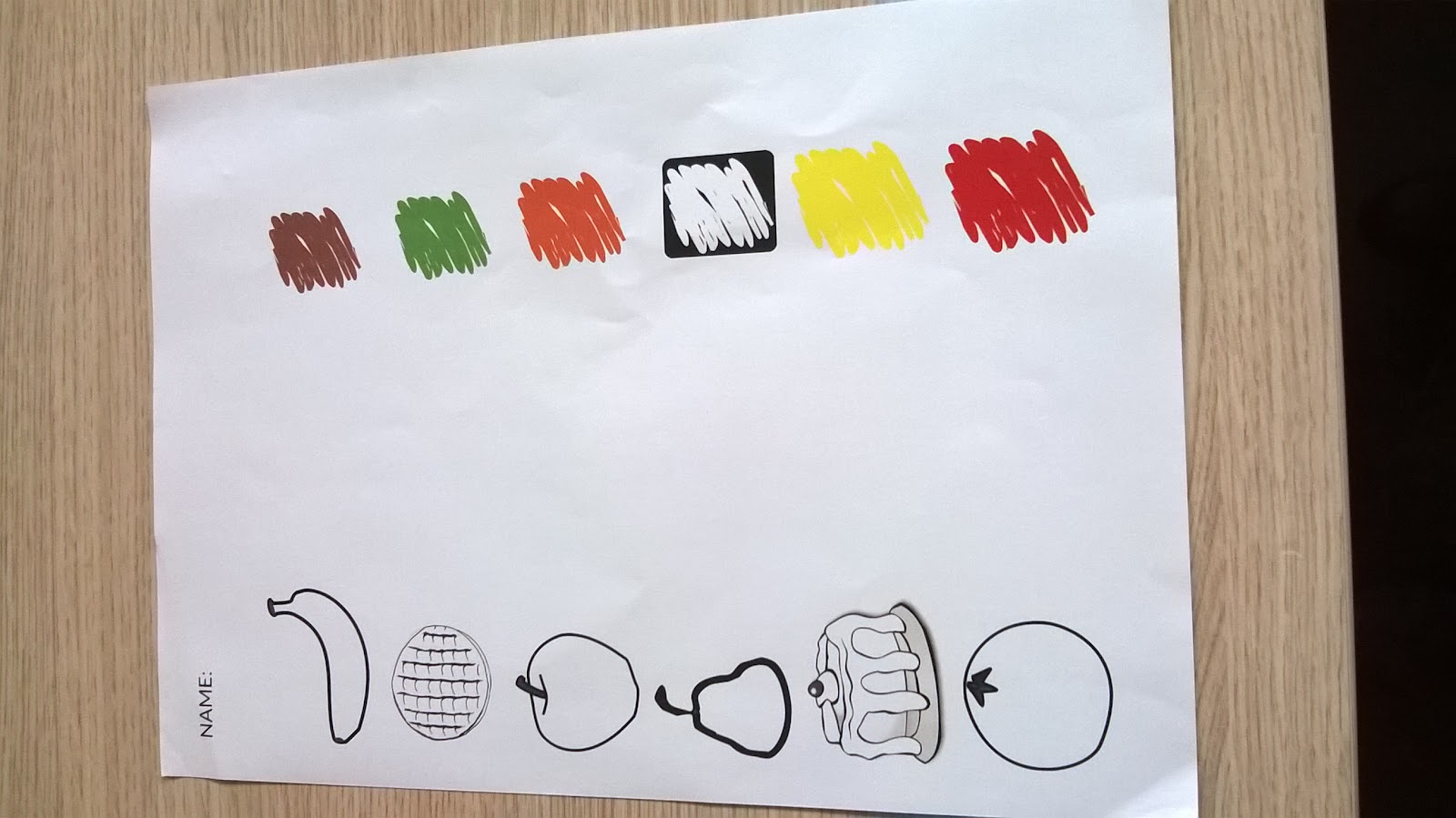
The sheet to match food items and colours
When it came to planning how each activity would be done, I had in mind my major difficulties from the experience in the previous years: momentum and rhythm. HH is about building up a sort of “bubble of interaction” with the group. First, you have to grab their attention, which is not that difficult, and that’s when you blow the bubble. Then comes the difficult part: maintaining the bubble so it doesn’t go flat due to lack of momentum, nor does it burst. The teacher needs to use the right rhythm and intensity, so the bubble will take the whole group in, and last for all the activity. I have seen it being done in the two previous years by my tutor in the school placement, but it is very hard for me to do. Most of the times my bubble would go flat, so I know that I need to pay a lot of attention to transitions between activities, and that is where I concentrated in my lesson yesterday.
I went for a simple task (matching food items with colours), which was nevertheless demanding, because children only listened to the song once before completing it (we modelled the first two matchings in the big group and then each child was given their own sheet to do all the six items). I also decided to keep it simple when we listened to the song for the second time (at the beginning I thought we could listen to it standing up and dancing), because I didn’t want to lose control of the group. So, I gave one card to each, explained that when each of them heard the colour of their card, they would stick it up on the air and sing along using the gestures and turning the card around to show the food item with the lyrics.
Finally, I recorded the lesson with a videocamera, so I could watch it afterwards.
And now, it is time for my conclusions on the lesson. The first impression was great; the lesson went just fine, we all enjoyed, we finished on time, and the objectives were all met. The English teacher helped me a lot containing children and taking care of the materials (collecting pencils, sheets etc.). So, I can say I managed to do well with her help. On the other hand, I am aware that believing all objectives had been met most probably means that I was either too lenient on myself, or my objectives were not ambitious enough.
Recording lessons is a great tool for self-assessment which I think I should keep if I ever become a teacher. It gives you the opportunity to watch yourself objectively and also to see things which went unnoticed during the lesson itself. Regarding things I need to improve, there are obviously several; for instance, a simple but important one: organise material. I didn’t keep my flashcards held with rubber bands, and as a result one of the children messed them up, which wasn’t that much of a problem, but reminded me of the importance of those small things, especially when you are the only adult in the classroom. Also, I didn’t keep my peripheral view on the classroom at some moments (when I was collecting things and so on), because I knew I had other two adults in the room, and I relaxed even if I didn’t want to. Towards the end of the lesson one of the children refused to participate singing the song for the second time. Ideally, I would have gone to her to see what was wrong, but because I was so concerned with not losing momentum, I carried on without her. In general, I would say that I played conservative, I hardly took any risks, which is ok for a first lesson (even quite advisable and wise), but wouldn’t be acceptable in the long run.
On the good side, I am happy to see that I smiled a lot. I am not very smiley (or so I think, at least), and I believe it is of great importance to smile around children. You have so much to win and so little to lose when you do so! I was also clear in my explanations (I had thought them quite carefully), I addressed children individually by their names to promote interaction, and I got them to participate.
I just did the co-assessment on the lesson with the teacher, and she said that the only thing she would have changed would have been the second time we listened to the song, when she would have had children dancing, instead of sitting down, as I finally decided. She has advised me not to be afraid of losing control of the group, and she is very right, because I have her there to help me if that happens, plus the PT who joins the group to support one of the children.
Well, this is all for this week. Next week I want to talk about some ideas for the practical part of my undergraduate dissertation, where I will be taking active part in the English classes at school in order to collect data for my dissertation. My tutor here told me yesterday that some of the LH groups have already finished the unit that was meant to be done before Christmas, and she doesn’t want to start with a new story, so she needs to think about things to do in these coming weeks. The whole week before Christmas will be used to do activities related to those celebrations, but this coming week she will set up something different.
I will make sure I learn the new stories that they will be working on in HH4 and HH5 after Christmas, so I can take turns with the teacher when we work on them. The problem in HH is that the Artigal material’s planning is designed for schools where they have 2 hours of English every week, and here the teacher only has 1,5 hours. Therefore, she is quite tight and we will not be able to insert extra lessons that maybe I could propose. Instead, I will have to concentrate on teaching the regular lessons taking her place, which will be a very good opportunity too. After Christmas, I will most probably be attending more than one group of HH4 and HH5, so maybe I can watch the English teacher performing a lesson with one group, and then do that same lesson with another group myself.
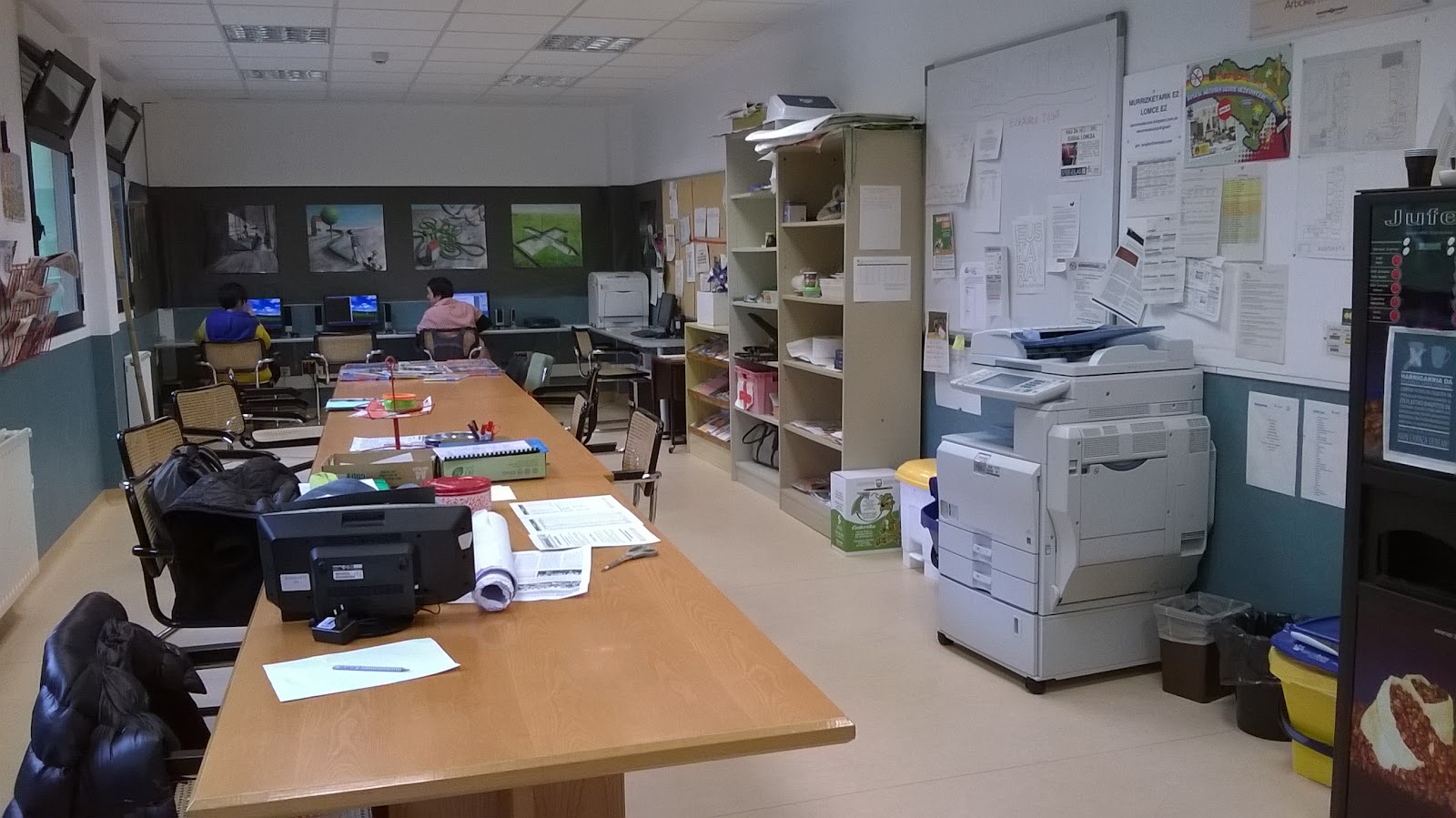
Oh, and just a final picture to show you the great teachers’ room we have:
2014/11/12
Things I like from several foreign language teaching methods
The review we did last week on the ten methods and approaches for learning and teaching languages we have been working on along the term gave me the perfect chance to pick concepts and ideas I like the most from each. As Diane Larsen-Freeman states in her book titled Techniques and Principles in Language Teaching, we don't need to agree with every principle of a certain method; we could just take some techniques or principles linked with it which we feel that fit into the idea of language teaching we are trying to build during this Minor.
So, for now, I would say that these are the things I have found attractive and useful in each method:
So, for now, I would say that these are the things I have found attractive and useful in each method:
- Grammar translation method: I liked the focus on culture and literature linked with the target language. I also think that working on synonyms and antonyms could be useful in some situations, because as we have learned in psycho-motricity, the notion of contrast is a powerful resource for learning, and synonyms and antonyms are about similarity and contrast in language.
- Audio-lingual method: I liked the fact that it works mainly on listening and speaking skills at the beginning. I also like the importance given to input quality, and the fact that errors are corrected immediately. The use of minimal pairs can be useful too, as it focuses on contrast and can help learners become aware of phonemes in the target language which might be hard to discriminate. The fact that students have an active role, even though the interaction is teacher-directed, is a plus too.
- Silent way: I find the notion of silence as a teaching tool very interesting, because it draws our attention to the interaction pattern and the need to weight carefully when the teacher should speak. Thinking of ways to be an active teacher using resources other that speaking is challenging too. The fact that students are encouraged to be autonomous learners is also interesting. I also like the idea of students working cooperatively and becoming highly involved in the activities. I find linking language learning to problem solving, and seeing it as a guided discovery very interesting too.
- Suggestopedia: The fact that it takes into account the role of students' feeling in the learning process is one of the main points I like. Therefore, creating a nice atmosphere will improve learning. I also liked the use of direct and indirect positive suggestions, and the fact that we can take advantage of peripheral learning. Adopting a new identity and singing songs as tools to loosen up and reach a state in which we will be more open to learning is also attractive.
- Community language learning: I like the fact that the role of the teacher evolves along the learning process in a way which resembles scaffolding. I also like the importance given to psychology, the active role of learners and the focus on building a community of learners who will support each other. Learning in a laid back atmosphere, through natural conversations which follow learners' interests is also an interesting idea. Enabling learners to produce right from the beginning can also be a very good way to improve motivation and, obviously, working in small groups would be ideal too.
- Total physical response: I like very much the notion of enjoying while we learn and the fact that the learners starts to produce when they feel ready for it. Regarding non-verbal responds done with body movements as a way of production will also be encouraging for learners. Besides, learning through movement and action fits very well with the way children learn, especially in pre-primary.
- Communicative approach: I like that fact that it adds more competences to the grammatical competence taken into account by the traditional methods mentioned so far (sociolinguistic, strategic and discourse competences). Placing learners in real life situations where language becomes the tool to solve a problem is also very interesting. The fact that activities need to be meaningful for learners, and that both teacher's goals and students' goals need to be taken into account is also important. The focus on interaction among students, using authentic materials, games and role play are powerful ideas too.
- Natural way: I like the focus on everyday life vocabulary and situations, the stress on having a nice atmosphere, the notion of i+1 (input a bit above of what the learner has already achieved), and the use of realia, gestures, total physical response, games, stories and songs. Since it is based on the way we naturally learn language, it can be very appropriate for pre-primary, bearing in mind that we will by no means have the amount of exposure needed to learn language using this method only.
- Process programme (task based learning), and CLIL: setting real life situations which students might encounter in life, where a natural context for language use is provided sounds like the right thing to do. Language becomes the tool to deal with the situation, in a problem-solving context. I also like very much the idea of focusing on the process, instead of the final outcome. Placing the focus on students, having tasks which are meaningful for learners, transcending the classroom walls and working on a topic or project for several weeks are also very interesting ideas in my opinion. The notion of acquiring language at the same time as we build knowledge on diverse topics fits in very well with the way teaching and learning are approached in pre-primary, so it is very useful.
2014/11/02
More lesson planning
Last Friday we continued with our lesson planning. First, we watched a video of two former students who brought children (now, that is real realia!) to their lesson presentation. Besides, it was a very interesting presentation, because they showed several English children's games. Apparently, these students listened to their classmates' concerns on how little they knew about games to use at school, in the playground during break time, so they organised a lesson around that topic. Now, that is a really nice thing to do for your classmates (and yourself).
The video also served as an introduction to what our presentations will be like at the end of the year, after we come back from our in-school training period, when we will also have real children. That will be great, because we will be able to see with our own eyes if our ideas work or not. I can't wait!
Oh, and I already have a guinea-pig volunteer; yesterday afternoon I saw my 6-year-old niece, and she showed me her new classroom's windows from the outside (she just started primary in a different location, but in the same school). So, I told her I might ask her teacher for permission to come one day (I did my two in-school trainings at her school), and then she remembered she came to university last year, when our psycho-motricity teacher gave us the chance to bring our in-school training class to university. She wasn't in my class, but since I knew she would love to come, I asked the teachers and herself, and she came along with "my" class. Well, yesterday she said that she would like to come to my "school" again, and that she is going to ask her teacher if they can come. Obviously, I told her that I also needed to ask my teachers for permission. So, if we happen to be short on primary first children, I have a very enthusiastic volunteer willing to recruit her class!
The video also served as an introduction to what our presentations will be like at the end of the year, after we come back from our in-school training period, when we will also have real children. That will be great, because we will be able to see with our own eyes if our ideas work or not. I can't wait!
Oh, and I already have a guinea-pig volunteer; yesterday afternoon I saw my 6-year-old niece, and she showed me her new classroom's windows from the outside (she just started primary in a different location, but in the same school). So, I told her I might ask her teacher for permission to come one day (I did my two in-school trainings at her school), and then she remembered she came to university last year, when our psycho-motricity teacher gave us the chance to bring our in-school training class to university. She wasn't in my class, but since I knew she would love to come, I asked the teachers and herself, and she came along with "my" class. Well, yesterday she said that she would like to come to my "school" again, and that she is going to ask her teacher if they can come. Obviously, I told her that I also needed to ask my teachers for permission. So, if we happen to be short on primary first children, I have a very enthusiastic volunteer willing to recruit her class!
2014/11/01
Multilingual education in the Basque Autonomous Community
1. Introduction
The Basque country is currently facing an important challenge: the transition from bilingual education to multilingualism. Previous learnings from the development of the bilingual education system, which started in the 1960’s, will prove useful to build a new framework for the introduction of foreign language learning while ensuring that Basque, a minority language, is maintained and its situation improved.
This document sums up the evolution of bilingual education in the Basque Autonomous Community (BAC), briefly mentions the main resources that the Basque Government offers in order to support the system, summarises the projects and plans for multilingual education that have emerged in the last years, and outlines the main findings of research conducted on the subject.
2. Bilingual education and its evolution
Compulsory education in the BAC is divided into primary education (ages 6 to 12) and secondary education (ages 12 to 16). The early years stage (ages 2 to 6) is not compulsory, although most children attend school or nurseries at those ages. Further education (ages 16 to 18) is offered too. There are state-funded schools and fee-paying private schools in the BAC, and each account for approximately 50% of the total amount of students (Zalbide & Cenoz, 2008, p. 7).
In the 1960’s, during Franco’s regime, several private schools (“ikastolak”) were the starting point of Basque education. Although they were not recognised as official schools at first, their development forced the dictatorial regime to accept them. With the return of democracy, in 1979 Basque gained the official language status in the BAC, together with Spanish (Cenoz & Etxague, 2011, p. 34; Elorza, 2013, pp. 2–3; Gardner & Zalbide, 2005, pp. 56–57; Zalbide & Cenoz, 2008, pp. 7–8).
The Law for the Standardisation of the Use of Basque (1982) and its development through the Decree for Education (1983) set that both Basque and Spanish would be compulsory units in all schools in order to guarantee the possibility of having acquired both at the end of compulsory education, and established three schooling models (A, B and D) from which families could choose. The A model is a Spanish-medium model where Basque is taught as a second language for 3 to 5 hours a week, in the B model each of the two languages is used during approximately half of the school time, and in the D model Basque is the language of instruction and Spanish is taught as a subject for 3 to 5 hours a week (Cenoz & Etxague, 2011, pp. 34–35; Elorza, 2013, pp. 5–6; Gardner & Zalbide, 2005, pp. 58–59; Zalbide & Cenoz, 2008, pp. 8–9).
The 1983 Decree ceased to be in effect after the 1993 Basque Schooling Law was passed, which maintained the three models and gave the “ikastolak” the chance to either integrate into the public education system or in the private sector (Gardner & Zalbide, 2005, p. 59).
The D model has increasingly been chosen by families since the bilingual models were established, growing from 25% in the eighties to 80-90% nowadays (Cenoz & Etxague, 2011, p. 35; Elorza, 2013, p. 13; Zalbide & Cenoz, 2008, pp. 10–11). This has resulted in a considerable increase in the number of bilinguals in the BAC, growing from 528 521 in 1991 to 714 136 in 2001 (Elorza, 2013, p. 16).
The bilingual education system had to face several challenges from the beginning (Gorter, Zenotz, Etxague, & Cenoz, 2014, pp. 210–211; Zalbide & Cenoz, 2008, pp. 11–16), such as improving teachers’ proficiency in Basque, developing materials in Basque or the standardisation of Basque. Although a great deal has been done in those fields, the improvement of the use of the language and its quality remain as important goals still to be reached (Gardner & Zalbide, 2005, pp. 65–69). There is also growing debate on the adequacy of the three bilingual models in the light of the evolution that has been outlined here and new challenges brought by the introduction of a third (or fourth) language in schools (Gorter et al., 2014, pp. 211–214; Zalbide & Cenoz, 2008, pp. 16–19) due to the spread of English as a lingua franca (Jessner & Cenoz, 2007, pp. 156–157).
3. Services and resources offered by the Basque Government
Regarding material resources, besides developing school facilities, the Basque Government has given support to develop terminology (standardisation of Basque), offered grants to teachers so they could produce materials, subsidised the printing and translating costs (EIMA), controlled the quality of materials, catalogued them and awarded best practices (Elorza, 2013, pp. 7–11; Gardner & Zalbide, 2005, p. 59).
The improvement of teachers’ proficiency in Basque has been achieved through training programmes (IRALE) where teachers could benefit from a full-time paid leave in order to improve their linguistic skills. Those schools that chose to also received training and support to evolve from the A model to the D model (Gardner & Zalbide, 2005, pp. 59–60).
The Basque Government also issues guidelines regarding pedagogical, curricular and organisational aspects such as grouping children according to their language skills in Basque and Spanish, the choice of subjects to be taught in each language in the B model, as well as appropriate teaching methodologies (Gardner & Zalbide, 2005, pp. 61–63). Teachers at state-funded schools have access to training programmes (PREST GARA) and receive support from regional centres (BERRITZEGUNEAK) in order to improve their teaching skills (Elorza, 2013, pp. 7–10), whereas fee-paying private schools have their own consultants (Cenoz & Etxague, 2011, p. 41).
There are also programmes to promote the use of Basque (NOLEGA) and the Basque Institute for Research and Assessment in Education (ISEI-IVEI) is involved in the development and monitoring of the Basque education system (Elorza, 2013, p. 7).
4. Current projects and plans for multilingual education
The bilingual education system set up in the eighties has evolved into a multilingual system at the beginning of the 21st century. Three main trends have been identified in terms of the improvement of the use of English in the curriculum (Cenoz & Etxague, 2011, p. 36): early learning in pre-primary, the use of the Content and Language Integrated Learning (CLIL) approach, and the use of English as an additional language of instruction.
State-funded schools and private fee-paying schools have developed several projects and plans which follow the three main trends mentioned above. Basque-medium private schools, “ikastolak”, developed the Eleanitz project; Christian private schools, “kristau eskola”, developed the Aniztu programme, and the Basque Government established a trilingual education framework (HMH-MET) which was recently changed into the Heziberri 2020 framework.
Eleanitz is the multilingual school model for “ikastolak”. It introduced English as L3 at the age of four within a global strategy (School Language Project) for the development of languages during compulsory education, based on a communicative approach to language learning and a CLIL perspective (Elorza & Muñoa, 2008, pp. 87–89). Therefore, and integrated curriculum is designed for all languages to be learned at school, taking into account that both common general skills as well as skills for specific languages will need to be acquired (Elorza & Muñoa, 2008, pp. 91–92). Basque is regarded as the main language in school and sociocultural factors are taken into account to give a different weight to each language (Elorza & Muñoa, 2008, pp. 92–93).
Aniztu has mainly focused on teacher training in order to develop their linguistic skills in English and the Teaching Assistant in the Basque Country (TABC) programme, which introduces native English speakers in the classrooms to provide high quality input (‘Kristau Eskola. Pedagogia proiektua’, n.d.).
State-funded schools had a multilingual programme before the academic year 2010-2011, with early English learning starting at age 4 (INGLEGOIZ) using DIP, DIP, DIP materials (‘Foreign language teaching in the Basque Schools’, n.d.), and a CLIL approach in primary (INEBI) and secondary (BHINEBI) education (Eusko Jaurlaritza, 2011, pp. 13–15; Vázquez, 2012). This eventually led to the trilingual education experimental process established in 2010-2011 (Eusko Jaurlaritza, 2011), which has recently been changed into the Heziberri 2020 framework (Eusko Jaurlaritza, 2014).
5. Results of multilingual experimental programmes
On general terms, there is increasing evidence supporting that bilingualism has a positive effect on third language acquisition and that the introduction of English has no negative effects on the development of Basque, Spanish and content learning (Cenoz & Etxague, 2011, pp. 42–43; Jessner & Cenoz, 2007, pp. 162–164).
Moreover, Basque proficiency is significantly higher among those students in the D model, whereas the language of instruction has no significant effect on the proficiency in Spanish. D model students also score higher on English than students in the A or B models (Gorter et al., 2014, pp. 214–216).
Experimental results of the Eleanitz project have shown no significant differences among students who had undergone the project and others who had not, regarding their skills in Basque and Spanish, as well as their cognitive development (Elorza & Muñoa, 2008, p. 93; Lasagabaster Herrarte, 2011, p. 96). Research outcomes also suggest that early exposure to English also has a positive impact on English proficiency (Lasagabaster Herrarte, 2011, pp. 96–97).
6. References
Cenoz, J., & Etxague, X. (2011). Third language learning and trilingual education in the Basque Country. In S. Björklund & I. Bangma, Trilingual primary education in Europe: some developments with regard to the provisions of trilingual primary education in minority language communities of the European Union (pp. 32–44). Ljouwert/Leeuwarden; Ljouwert/Leeuwarden: Fryske Akademy ; Mercator Education.
Elorza, I. (2013). The Basque education system.
Elorza, I., & Muñoa, I. (2008). Promoting the Minority Language Through Integrated Plurilingual Language Planning: The Case of the Ikastolas. Language, Culture and Curriculum, 21(1), 85–101. doi:10.2167/lcc345.0
Eusko Jaurlaritza. (2011). Hezkuntza marko hirueledunaren esperimentazio prozesua. Dokumentu markoa 2010-11. Retrieved from http://www.hezkuntza.ejgv.euskadi.net/r43-2459/es/contenidos/informacion/dig_publicaciones_innovacion/es_dig_publ/adjuntos/19_hizkuntzak_500/500013e_Pub_EJ_experimentacion_MET_e.pdf
Eusko Jaurlaritza. (2014). Heziberri 2020. Hezkuntza-eredu pedagogikoaren markoa.
Foreign language teaching in the Basque Schools. (n.d.).
Gardner, N., & Zalbide, M. (2005). Basque acquisition planning. International Journal of the Sociology of Language, 2005(174), 55–72. doi:10.1515/ijsl.2005.2005.174.55
Gorter, D., Zenotz, V., Etxague, X., & Cenoz, J. (2014). Multilingualism and European Minority Languages: The Case of Basque. In D. Gorter, V. Zenotz, & J. Cenoz (Eds.), Minority Languages and Multilingual Education (pp. 201–220). Springer Netherlands. Retrieved from http://link.springer.com/chapter/10.1007/978-94-007-7317-2_12
Jessner, U., & Cenoz, J. (2007). Teaching English as a Third Language. In J. Cummins & C. Davison (Eds.), International Handbook of English Language Teaching (pp. 155–167). Springer US. Retrieved from http://link.springer.com/chapter/10.1007/978-0-387-46301-8_12
Kristau Eskola. Pedagogia proiektua. (n.d.).
Lasagabaster Herrarte, D. (2011). Basque as a Minority Language and English as a Foreign Language: are they Complementary Languages in the Basque Educational System? Annales-Anali Za Istrske in Mediteranske Studije, 21(1), 93–100.
Vázquez, M. D. (2012). Multilingual education in the Basque Country. A step towards CLIL?.
Zalbide, M., & Cenoz, J. (2008). Bilingual Education in the Basque Autonomous Community: Achievements and Challenges. Language, Culture and Curriculum, 21(1), 5–20. doi:10.2167/lcc339.0
The Basque country is currently facing an important challenge: the transition from bilingual education to multilingualism. Previous learnings from the development of the bilingual education system, which started in the 1960’s, will prove useful to build a new framework for the introduction of foreign language learning while ensuring that Basque, a minority language, is maintained and its situation improved.
This document sums up the evolution of bilingual education in the Basque Autonomous Community (BAC), briefly mentions the main resources that the Basque Government offers in order to support the system, summarises the projects and plans for multilingual education that have emerged in the last years, and outlines the main findings of research conducted on the subject.
2. Bilingual education and its evolution
Compulsory education in the BAC is divided into primary education (ages 6 to 12) and secondary education (ages 12 to 16). The early years stage (ages 2 to 6) is not compulsory, although most children attend school or nurseries at those ages. Further education (ages 16 to 18) is offered too. There are state-funded schools and fee-paying private schools in the BAC, and each account for approximately 50% of the total amount of students (Zalbide & Cenoz, 2008, p. 7).
In the 1960’s, during Franco’s regime, several private schools (“ikastolak”) were the starting point of Basque education. Although they were not recognised as official schools at first, their development forced the dictatorial regime to accept them. With the return of democracy, in 1979 Basque gained the official language status in the BAC, together with Spanish (Cenoz & Etxague, 2011, p. 34; Elorza, 2013, pp. 2–3; Gardner & Zalbide, 2005, pp. 56–57; Zalbide & Cenoz, 2008, pp. 7–8).
The Law for the Standardisation of the Use of Basque (1982) and its development through the Decree for Education (1983) set that both Basque and Spanish would be compulsory units in all schools in order to guarantee the possibility of having acquired both at the end of compulsory education, and established three schooling models (A, B and D) from which families could choose. The A model is a Spanish-medium model where Basque is taught as a second language for 3 to 5 hours a week, in the B model each of the two languages is used during approximately half of the school time, and in the D model Basque is the language of instruction and Spanish is taught as a subject for 3 to 5 hours a week (Cenoz & Etxague, 2011, pp. 34–35; Elorza, 2013, pp. 5–6; Gardner & Zalbide, 2005, pp. 58–59; Zalbide & Cenoz, 2008, pp. 8–9).
The 1983 Decree ceased to be in effect after the 1993 Basque Schooling Law was passed, which maintained the three models and gave the “ikastolak” the chance to either integrate into the public education system or in the private sector (Gardner & Zalbide, 2005, p. 59).
The D model has increasingly been chosen by families since the bilingual models were established, growing from 25% in the eighties to 80-90% nowadays (Cenoz & Etxague, 2011, p. 35; Elorza, 2013, p. 13; Zalbide & Cenoz, 2008, pp. 10–11). This has resulted in a considerable increase in the number of bilinguals in the BAC, growing from 528 521 in 1991 to 714 136 in 2001 (Elorza, 2013, p. 16).
The bilingual education system had to face several challenges from the beginning (Gorter, Zenotz, Etxague, & Cenoz, 2014, pp. 210–211; Zalbide & Cenoz, 2008, pp. 11–16), such as improving teachers’ proficiency in Basque, developing materials in Basque or the standardisation of Basque. Although a great deal has been done in those fields, the improvement of the use of the language and its quality remain as important goals still to be reached (Gardner & Zalbide, 2005, pp. 65–69). There is also growing debate on the adequacy of the three bilingual models in the light of the evolution that has been outlined here and new challenges brought by the introduction of a third (or fourth) language in schools (Gorter et al., 2014, pp. 211–214; Zalbide & Cenoz, 2008, pp. 16–19) due to the spread of English as a lingua franca (Jessner & Cenoz, 2007, pp. 156–157).
3. Services and resources offered by the Basque Government
Regarding material resources, besides developing school facilities, the Basque Government has given support to develop terminology (standardisation of Basque), offered grants to teachers so they could produce materials, subsidised the printing and translating costs (EIMA), controlled the quality of materials, catalogued them and awarded best practices (Elorza, 2013, pp. 7–11; Gardner & Zalbide, 2005, p. 59).
The improvement of teachers’ proficiency in Basque has been achieved through training programmes (IRALE) where teachers could benefit from a full-time paid leave in order to improve their linguistic skills. Those schools that chose to also received training and support to evolve from the A model to the D model (Gardner & Zalbide, 2005, pp. 59–60).
The Basque Government also issues guidelines regarding pedagogical, curricular and organisational aspects such as grouping children according to their language skills in Basque and Spanish, the choice of subjects to be taught in each language in the B model, as well as appropriate teaching methodologies (Gardner & Zalbide, 2005, pp. 61–63). Teachers at state-funded schools have access to training programmes (PREST GARA) and receive support from regional centres (BERRITZEGUNEAK) in order to improve their teaching skills (Elorza, 2013, pp. 7–10), whereas fee-paying private schools have their own consultants (Cenoz & Etxague, 2011, p. 41).
There are also programmes to promote the use of Basque (NOLEGA) and the Basque Institute for Research and Assessment in Education (ISEI-IVEI) is involved in the development and monitoring of the Basque education system (Elorza, 2013, p. 7).
4. Current projects and plans for multilingual education
The bilingual education system set up in the eighties has evolved into a multilingual system at the beginning of the 21st century. Three main trends have been identified in terms of the improvement of the use of English in the curriculum (Cenoz & Etxague, 2011, p. 36): early learning in pre-primary, the use of the Content and Language Integrated Learning (CLIL) approach, and the use of English as an additional language of instruction.
State-funded schools and private fee-paying schools have developed several projects and plans which follow the three main trends mentioned above. Basque-medium private schools, “ikastolak”, developed the Eleanitz project; Christian private schools, “kristau eskola”, developed the Aniztu programme, and the Basque Government established a trilingual education framework (HMH-MET) which was recently changed into the Heziberri 2020 framework.
Eleanitz is the multilingual school model for “ikastolak”. It introduced English as L3 at the age of four within a global strategy (School Language Project) for the development of languages during compulsory education, based on a communicative approach to language learning and a CLIL perspective (Elorza & Muñoa, 2008, pp. 87–89). Therefore, and integrated curriculum is designed for all languages to be learned at school, taking into account that both common general skills as well as skills for specific languages will need to be acquired (Elorza & Muñoa, 2008, pp. 91–92). Basque is regarded as the main language in school and sociocultural factors are taken into account to give a different weight to each language (Elorza & Muñoa, 2008, pp. 92–93).
Aniztu has mainly focused on teacher training in order to develop their linguistic skills in English and the Teaching Assistant in the Basque Country (TABC) programme, which introduces native English speakers in the classrooms to provide high quality input (‘Kristau Eskola. Pedagogia proiektua’, n.d.).
State-funded schools had a multilingual programme before the academic year 2010-2011, with early English learning starting at age 4 (INGLEGOIZ) using DIP, DIP, DIP materials (‘Foreign language teaching in the Basque Schools’, n.d.), and a CLIL approach in primary (INEBI) and secondary (BHINEBI) education (Eusko Jaurlaritza, 2011, pp. 13–15; Vázquez, 2012). This eventually led to the trilingual education experimental process established in 2010-2011 (Eusko Jaurlaritza, 2011), which has recently been changed into the Heziberri 2020 framework (Eusko Jaurlaritza, 2014).
5. Results of multilingual experimental programmes
On general terms, there is increasing evidence supporting that bilingualism has a positive effect on third language acquisition and that the introduction of English has no negative effects on the development of Basque, Spanish and content learning (Cenoz & Etxague, 2011, pp. 42–43; Jessner & Cenoz, 2007, pp. 162–164).
Moreover, Basque proficiency is significantly higher among those students in the D model, whereas the language of instruction has no significant effect on the proficiency in Spanish. D model students also score higher on English than students in the A or B models (Gorter et al., 2014, pp. 214–216).
Experimental results of the Eleanitz project have shown no significant differences among students who had undergone the project and others who had not, regarding their skills in Basque and Spanish, as well as their cognitive development (Elorza & Muñoa, 2008, p. 93; Lasagabaster Herrarte, 2011, p. 96). Research outcomes also suggest that early exposure to English also has a positive impact on English proficiency (Lasagabaster Herrarte, 2011, pp. 96–97).
6. References
Cenoz, J., & Etxague, X. (2011). Third language learning and trilingual education in the Basque Country. In S. Björklund & I. Bangma, Trilingual primary education in Europe: some developments with regard to the provisions of trilingual primary education in minority language communities of the European Union (pp. 32–44). Ljouwert/Leeuwarden; Ljouwert/Leeuwarden: Fryske Akademy ; Mercator Education.
Elorza, I. (2013). The Basque education system.
Elorza, I., & Muñoa, I. (2008). Promoting the Minority Language Through Integrated Plurilingual Language Planning: The Case of the Ikastolas. Language, Culture and Curriculum, 21(1), 85–101. doi:10.2167/lcc345.0
Eusko Jaurlaritza. (2011). Hezkuntza marko hirueledunaren esperimentazio prozesua. Dokumentu markoa 2010-11. Retrieved from http://www.hezkuntza.ejgv.euskadi.net/r43-2459/es/contenidos/informacion/dig_publicaciones_innovacion/es_dig_publ/adjuntos/19_hizkuntzak_500/500013e_Pub_EJ_experimentacion_MET_e.pdf
Eusko Jaurlaritza. (2014). Heziberri 2020. Hezkuntza-eredu pedagogikoaren markoa.
Foreign language teaching in the Basque Schools. (n.d.).
Gardner, N., & Zalbide, M. (2005). Basque acquisition planning. International Journal of the Sociology of Language, 2005(174), 55–72. doi:10.1515/ijsl.2005.2005.174.55
Gorter, D., Zenotz, V., Etxague, X., & Cenoz, J. (2014). Multilingualism and European Minority Languages: The Case of Basque. In D. Gorter, V. Zenotz, & J. Cenoz (Eds.), Minority Languages and Multilingual Education (pp. 201–220). Springer Netherlands. Retrieved from http://link.springer.com/chapter/10.1007/978-94-007-7317-2_12
Jessner, U., & Cenoz, J. (2007). Teaching English as a Third Language. In J. Cummins & C. Davison (Eds.), International Handbook of English Language Teaching (pp. 155–167). Springer US. Retrieved from http://link.springer.com/chapter/10.1007/978-0-387-46301-8_12
Kristau Eskola. Pedagogia proiektua. (n.d.).
Lasagabaster Herrarte, D. (2011). Basque as a Minority Language and English as a Foreign Language: are they Complementary Languages in the Basque Educational System? Annales-Anali Za Istrske in Mediteranske Studije, 21(1), 93–100.
Vázquez, M. D. (2012). Multilingual education in the Basque Country. A step towards CLIL?.
Zalbide, M., & Cenoz, J. (2008). Bilingual Education in the Basque Autonomous Community: Achievements and Challenges. Language, Culture and Curriculum, 21(1), 5–20. doi:10.2167/lcc339.0
2014/10/25
Task based learning
This past Thursday we had our last two presentations on language learning/teaching methods. The first one was on Process Programmes. When I first heard the name, at the beginning of the term, when our teacher introduced the list of methods we were going to study, I thought it would be linked with cognitive psychology and our brain working like a computer. Well, none of that, at least by what was mentioned in class. Our classmates focused on Task Based Learning (TBL), leaving Content Based Learning (CBL) aside.
They started off with Jimmy, who happened to be Charlie's twin brother and, of course, we were a bit put off, thinking that was an easy trick (we have become really picky as the term developed, it seems), but we soon saw that it was nothing like Charlie's activity, so we agreed to give it a try. At least that was the impression I got from our reaction while the presentation started. So, we made our list for a healthy breakfast for Jimmy, who was unfit, just like Charlie. I wonder if it would be wise to carry out such an activity in our schools, bearing in mind the amount of children who are overweight. Would they feel comfortable? Could some of them feel like a line had been crossed? On the other hand, we are talking about Jimmy, not Mikel or Aitor. The alter ego who faces and successfully deals with all kinds of problems (or suffers the painful consequences of not having conquered) is a very useful resource for children's learning. One of my best friend had Krispin, who had been running in the family for long, passed on from mother to daughter. All kinds of things happened to poor Krispin, depending on the child who listened to the stories. Children didn't seem to notice the trick, and seemed amused to find out about this character who happened to have the same problems as them.
Coming back to the presentation, I got a very clear idea: what really matters is the process, not the final outcome or product. Well, that is a big issue in education. It is a very nice thing to say, but are we really willing and prepared to assess the process, forgetting (mostly) the outcome? I don't think so. The final product is so deeply rooted into us, that we would need a huge effort to get rid of it. Still, it would do us so much good, and it would be so beneficial for many children!
I know I mentioned earlier in this diary that sometimes I felt like what we were learning was too far away from pre-primary teaching for me to be able to think how to adapt it. Well, none of that applies to TBL, because it is pure pre-primary teaching, just think of all those schools using project-based programmes in the Basque country.
Another interesting concept linked to TBL was transcending the classroom walls, which will eventually bring us to the learning community. That is a great idea, in my opinion. I love the Reggio Emilia air of TBL.
What I don't like that much is how we tend to choose the topics for the tasks or projects around here. At the end of the day, we somehow fool children to think that they chose the topic, when it was the teacher who had carefully planned it all well beforehand. Last year, we had the opportunity to read a paper on a project in a school inspired by Reggio Emilia, where the project unfolded genuinely following children's proposals. Children and teacher discovered the topic hand in hand, and it was beautiful. If the outcome is not really important, why does the teacher need to know the topic beforehand? I dream of a teacher like a storyteller we read about last year, who had a large gown, with lots of folds, where she hid small papers, and she could recall and re-create hundreds of stories just by reading the few notes on each small piece of paper. Wouldn't it be wonderful to become such a teacher!
Back to Earth, I have to mention that once again when talking on the disadvantages of TBL "too much freedom" came up, as well as the teacher needing to "control" (monitor was also mentioned). I am probably just old fashioned and have connections that give me goosebumps which younger students don't get when hearing those words.
The second presentation was on CLIL. It was also a very god presentation. The experiment to illustrate how different beaks are adapted to certain types of food was brilliant, I loved it. So, the two presentations introduced us to the content-language continuum, with CBL on one end (focus on learning content), TBL on the other end (focus on learning language), and CLIL in the middle. Of course, that is so in some ideal world, and not necessarily around here, and we had a chance to learn about the main problems of applying CLIL in our schools.
Funny to see that when our teacher asked if anybody had experienced CLIL in their education nobody mentioned the Minor we are currently taking. This unit, for instance, is pure CLIL. We have dealt with specific aspects of language, as well as contents on language learning/teaching, and I have the feeling the weight of both have been similar. CLIL is good too (well, good CLIL is good).
And finally, an interesting question our teacher threw when we were just finishing the lesson: what about those activities where children are asked to sit and colour or cut out and can stand for minutes in the English lesson receiving no input whatsoever, not producing and not thinking in English? We really need to think on ways to turn that around. It reminded me of the storytelling video we have just done in another unit. I did the storytelling with my 6 year-old niece, and I had never spoken English with her. I realised she knew quite a lot of vocabulary, but didn't recognise what I thought would be an easy question (how old are you?). Even though I did my in-school training at her school the previous two years, I didn't have the chance to attend their English lessons, but I do know they did colouring almost everyday. Our teacher's comment made me think on the kind of input she could have received.
They started off with Jimmy, who happened to be Charlie's twin brother and, of course, we were a bit put off, thinking that was an easy trick (we have become really picky as the term developed, it seems), but we soon saw that it was nothing like Charlie's activity, so we agreed to give it a try. At least that was the impression I got from our reaction while the presentation started. So, we made our list for a healthy breakfast for Jimmy, who was unfit, just like Charlie. I wonder if it would be wise to carry out such an activity in our schools, bearing in mind the amount of children who are overweight. Would they feel comfortable? Could some of them feel like a line had been crossed? On the other hand, we are talking about Jimmy, not Mikel or Aitor. The alter ego who faces and successfully deals with all kinds of problems (or suffers the painful consequences of not having conquered) is a very useful resource for children's learning. One of my best friend had Krispin, who had been running in the family for long, passed on from mother to daughter. All kinds of things happened to poor Krispin, depending on the child who listened to the stories. Children didn't seem to notice the trick, and seemed amused to find out about this character who happened to have the same problems as them.
Coming back to the presentation, I got a very clear idea: what really matters is the process, not the final outcome or product. Well, that is a big issue in education. It is a very nice thing to say, but are we really willing and prepared to assess the process, forgetting (mostly) the outcome? I don't think so. The final product is so deeply rooted into us, that we would need a huge effort to get rid of it. Still, it would do us so much good, and it would be so beneficial for many children!
I know I mentioned earlier in this diary that sometimes I felt like what we were learning was too far away from pre-primary teaching for me to be able to think how to adapt it. Well, none of that applies to TBL, because it is pure pre-primary teaching, just think of all those schools using project-based programmes in the Basque country.
Another interesting concept linked to TBL was transcending the classroom walls, which will eventually bring us to the learning community. That is a great idea, in my opinion. I love the Reggio Emilia air of TBL.
What I don't like that much is how we tend to choose the topics for the tasks or projects around here. At the end of the day, we somehow fool children to think that they chose the topic, when it was the teacher who had carefully planned it all well beforehand. Last year, we had the opportunity to read a paper on a project in a school inspired by Reggio Emilia, where the project unfolded genuinely following children's proposals. Children and teacher discovered the topic hand in hand, and it was beautiful. If the outcome is not really important, why does the teacher need to know the topic beforehand? I dream of a teacher like a storyteller we read about last year, who had a large gown, with lots of folds, where she hid small papers, and she could recall and re-create hundreds of stories just by reading the few notes on each small piece of paper. Wouldn't it be wonderful to become such a teacher!
Back to Earth, I have to mention that once again when talking on the disadvantages of TBL "too much freedom" came up, as well as the teacher needing to "control" (monitor was also mentioned). I am probably just old fashioned and have connections that give me goosebumps which younger students don't get when hearing those words.
The second presentation was on CLIL. It was also a very god presentation. The experiment to illustrate how different beaks are adapted to certain types of food was brilliant, I loved it. So, the two presentations introduced us to the content-language continuum, with CBL on one end (focus on learning content), TBL on the other end (focus on learning language), and CLIL in the middle. Of course, that is so in some ideal world, and not necessarily around here, and we had a chance to learn about the main problems of applying CLIL in our schools.
Funny to see that when our teacher asked if anybody had experienced CLIL in their education nobody mentioned the Minor we are currently taking. This unit, for instance, is pure CLIL. We have dealt with specific aspects of language, as well as contents on language learning/teaching, and I have the feeling the weight of both have been similar. CLIL is good too (well, good CLIL is good).
And finally, an interesting question our teacher threw when we were just finishing the lesson: what about those activities where children are asked to sit and colour or cut out and can stand for minutes in the English lesson receiving no input whatsoever, not producing and not thinking in English? We really need to think on ways to turn that around. It reminded me of the storytelling video we have just done in another unit. I did the storytelling with my 6 year-old niece, and I had never spoken English with her. I realised she knew quite a lot of vocabulary, but didn't recognise what I thought would be an easy question (how old are you?). Even though I did my in-school training at her school the previous two years, I didn't have the chance to attend their English lessons, but I do know they did colouring almost everyday. Our teacher's comment made me think on the kind of input she could have received.
2014/06/25
Nora zoaz, euskara?
Aurki sei urte beteko dituen ilobarekin igaro nuen arratsaldea atzo eta herenegun, biok eskola bukatu dugula aprobetxatuz. Ikasturte honetan, Haur Hezkuntzako etapako azkena beretzat, ia beti gaztelaniaz hitz egin dit, nik euskaraz egin diodan arren. D ereduan eskolatuta dago, aita elebiduna eta ama elebakarra ditu, eta eskolaz kanpo aitaren aldeko familiarekin duen harremana salbu, gaztelaniaz bizi den haurra dela esango nuke. Gaztelaniaz beti moldatu izan da hobeto, baina joan den udatik hona areagotu egin da bi hizkuntzen arteko tartea, eta orain oso nabarmena da hiztegia, gramatika eta jarioa bera dezente hobea duela gaztelaniaz. Practicum I eta IIa bere eskolan egin dudanez, beste lerroko gelan, ikusi ahal izan dut lau eta bost urteko geletan haurrek izan duten eboluzioa euskararen erabilerari dagokionean, eta benetan kezkagarria iruditu zait. Bost urteko gelan izan diren ikasturtean zehar haien arteko harremanak asko aberastu dira; alderdi sozialean garapen handia izan dute. Eta, aldi berean, gaztelania gailendu da erabat haien arteko komunikazioan. Etxean euskaraz hitz egiten duten haurrek ere euskararen erabileran atzerapauso nabarmena eman dute, hiztegia ahaztu dute, eta euskaraz aritzeko erraztasuna eta joera galdu dute. Salbatu diren bakarrak lagunak egiteko zailtasunak dituztenak izan dira; horiek euskarari eutsi diote.
Atzo honelako zerbait esan zidan ilobak: "zuk badakizu erdaraz, ezta? orduan, zergatik hitz egiten didazu euskaraz niri?". Ustekabean harrapatu ninduen galderak, egia esan, eta hainbat topikorekin erantzun nion: gustuko dudalako; euskara oso jende gutxik hitz egiten duelako, eta inork hitz egiten ez badu hilko delako; garai batean debekatuta zegoelako, eta orain horretarako libre garelako... Nire erantzunek ez zioten lagundu. Are gehiago, hotzikarak eman zizkidaten gauzak esateko bide eman zioten: aiton-amonak txikiak zirenean derrigorrez gaztelaniaz eskolatu behar zirela kontatu nionean, "zeinen zorte ona! niri, aldiz, euskarazko eskola batean tokatu zait" esan zuen.
Gauean buruari eragiten egon nintzen, eta nire buruari behintzat argitu ahal izan nion zergatik ez dudan amorerik ematen: niri ere bera bezain txikia nintzela euskara eman zidatelako, harri bitxiz egindako altxorra balitz bezala, eta nik ere egin nahi dudalako berdin, berari orain ikatza iruditzen bazaio ere; ez dudalako nahi gure belaunaldikoak familiako azken mohikanoak izatea; ez dudalako nire herrian arrotz sentitu nahi; ez dudalako umezurtz geratu nahi. Ez dakit hori guztia nola adieraziko diodan (orain, berari, baina inoiz irakasle banaiz, beste haur batzuei ere), baina saiatu beharko naiz.
Atzo honelako zerbait esan zidan ilobak: "zuk badakizu erdaraz, ezta? orduan, zergatik hitz egiten didazu euskaraz niri?". Ustekabean harrapatu ninduen galderak, egia esan, eta hainbat topikorekin erantzun nion: gustuko dudalako; euskara oso jende gutxik hitz egiten duelako, eta inork hitz egiten ez badu hilko delako; garai batean debekatuta zegoelako, eta orain horretarako libre garelako... Nire erantzunek ez zioten lagundu. Are gehiago, hotzikarak eman zizkidaten gauzak esateko bide eman zioten: aiton-amonak txikiak zirenean derrigorrez gaztelaniaz eskolatu behar zirela kontatu nionean, "zeinen zorte ona! niri, aldiz, euskarazko eskola batean tokatu zait" esan zuen.
Gauean buruari eragiten egon nintzen, eta nire buruari behintzat argitu ahal izan nion zergatik ez dudan amorerik ematen: niri ere bera bezain txikia nintzela euskara eman zidatelako, harri bitxiz egindako altxorra balitz bezala, eta nik ere egin nahi dudalako berdin, berari orain ikatza iruditzen bazaio ere; ez dudalako nahi gure belaunaldikoak familiako azken mohikanoak izatea; ez dudalako nire herrian arrotz sentitu nahi; ez dudalako umezurtz geratu nahi. Ez dakit hori guztia nola adieraziko diodan (orain, berari, baina inoiz irakasle banaiz, beste haur batzuei ere), baina saiatu beharko naiz.
2014/06/18
Haur Hezkuntzarako nire liburutegia
Goodreads plataforma erabilita Haur Hezkuntzari begira osatzen hasi naizen nire liburutegia blog honen bitartez partekatzeko alboko barran widget bat gehitu dut, tituluen mosaiko bat azalduko duena. Aurretik liburu batzuk banituen ere, bukatu berria dugun ikasturtean erosi ditut gehienak. Haur eta Gazte Literaturako lanak heldu batek urtean zehar irakurritako liburuen artean zenbatzeak balio badu, aurten primeran nabil!
Goodreads plataformak ingelesezko tituluak biltzen ditu gehienbat, eta nire liburutegiko ale asko hizkuntza horretan badaude ere, batzuk euskaraz edo gaztelaniaz dauzkat. Hori konpontzeko, Goodreads plataforman liburuzain bihurtzeko eskaera egin dut, eta horrela euskaraz eta gaztelaniaz ditudan liburuak igo ahal izango ditut.
Tresna interesgarria iruditzen zait. Haien zerrendak eginda dauzkaten Haur Hezkuntzako irakasleak bilatzen saiatuko naiz, eta horrela beste pertsona batzuen liburutegiak ezagutu ahal izango ditut. Oraingoz ez naiz liburu bakoitzari buruzko iritzirik idazten ausartu, ez baitakit nahitaez ingelesez egin behar ote dudan (horrela balitz, ez diot interes handirik ikusten), baina hori ere begiratuko dut. Liburu bakoitzari "puntuazioa" ematen hasi naiz, baina erosi aurretik orokorrean aurretik ondo aztertzen ditudanez, oso gustuko izaten ditut, eta ez dakit puntuazioarenak gehiegirako balio ote duen nire kasuan.
Goodreads plataformak ingelesezko tituluak biltzen ditu gehienbat, eta nire liburutegiko ale asko hizkuntza horretan badaude ere, batzuk euskaraz edo gaztelaniaz dauzkat. Hori konpontzeko, Goodreads plataforman liburuzain bihurtzeko eskaera egin dut, eta horrela euskaraz eta gaztelaniaz ditudan liburuak igo ahal izango ditut.
Tresna interesgarria iruditzen zait. Haien zerrendak eginda dauzkaten Haur Hezkuntzako irakasleak bilatzen saiatuko naiz, eta horrela beste pertsona batzuen liburutegiak ezagutu ahal izango ditut. Oraingoz ez naiz liburu bakoitzari buruzko iritzirik idazten ausartu, ez baitakit nahitaez ingelesez egin behar ote dudan (horrela balitz, ez diot interes handirik ikusten), baina hori ere begiratuko dut. Liburu bakoitzari "puntuazioa" ematen hasi naiz, baina erosi aurretik orokorrean aurretik ondo aztertzen ditudanez, oso gustuko izaten ditut, eta ez dakit puntuazioarenak gehiegirako balio ote duen nire kasuan.
2014/06/10
Olerkia lantzen agur esateko
Gaur arratsaldean "sorpresa" bat eraman diet haurrei: bakoitzarentzat olerkitxo bat argazki batekin.
 Banaka niregana etorri eta guztion artean oihartzunean irakurri ditugu. Sorpresa bat nekarrela esatean, batek galdetu dit ea etxeko lanak ote ziren (zer nolako irudia sortu du, bada, niri buruz gaixoak?), eta ezetz erantzun diodanean "eskerrak!!" esan du. Hala ere, ez zebilen hain oker, lan pixka bat ekarri dien oparia baitzen. Baten bat eskolatik atera eta hor zebilen, olerkia irakurtzen.
2014/06/08
Hizkuntzaren ebaluaziorako ariketa
Ahozko eta idatzizko hizkuntzaren ebaluazio-adierazle taula bat prestatu nuen tutorearen laguntzarekin, eta practicumean zehar betetzen joan naiz. Egia da otsailaren bukaeran practicuma hasi nuenetik hona haur gehienek idatzizko hizkuntza garapen nabarmena izan dutela, eta ebaluazioa epe luze samarrean egin dudanez, haur guztientzat ez dudala jaso ikasturtearen bukaerako egoera. Tutore lanak egitean, hori ekidin beharko litzateke, ebaluazio guztiak epe motzean eginda. Hala ere, helburua haurrak haien artean konparatzea ez denez, ez du garrantzi gehiegirik.

Hizkuntza idatziari dagokionean, hemezortzi haurretatik zortzi gai dira deskodetzeko, baina ez beti irakurritakoa ulertzeko, eta fase alfabetikoan daude idazketan (silabaren hizki guztiak edo ia guztiak idazten dituzte). Lau haur kontrako muturrean daude, hau da, idazketa eta irakurketaren hastapenetan; irakurtzean fonemak ahoskatu edo hizkiak esaten dituzte, eta idazketan hipotesi silabikoan daude. Beste sei haur tarteko bidean daude, garapenaren urrats diferenteetan. Hortaz, Haur Hezkuntzako etapako bigarren zikloan zehar haur hauek behintzat hizkuntza idatziarekin harremanetan hasi dira, eta batzuk interes bizia dute horrekiko (beste batzuk, aldiz, batere ez).
Ahozko hizkuntza eta hizkuntza idatziaren garapena haurretako batzuetan badirudi nahiko lotua doala; hau da, hizkuntza idatzian aurreratuta dauden haurretako batzuk ahozkoan ere aberatsak dira. Baina beste batzuetan oso nabarmena da ahozkoan trebeak direla, baina idatzizkoan ez, edo beste batzuetan nabarmena da plastika-hizkuntzaren garapen handia dagoela, eta idatzizkoarena ez dela horren parekoa. Hortaz, haur bakoitzak aurrera egiten du hizkuntzak bereganatzeko bidean, eta bide guztiak ez dira berdinak.
Honelako ebaluazioa interesgarria iruditu zait bost urteko gelako azken hilabetean edo egiteko, Lehen Hezkuntzara igarotzeko momentuan lagungarri izango delako haur bakoitzaren garapenaren inguruko informazioa. Hala ere, ez nioke garrantzi berezirik emango, eta beti izango nuke gogoan Haur Hezkuntzako etaparen helburua ez dela haurrek idazten eta irakurtzen jakitea, baizik eta idatzizko hizkuntzarekin lehen harremana izatea eta horrekin gozatzea, beste hizkuntza guztiekin bezala.
Hizkuntza idatziari dagokionean, hemezortzi haurretatik zortzi gai dira deskodetzeko, baina ez beti irakurritakoa ulertzeko, eta fase alfabetikoan daude idazketan (silabaren hizki guztiak edo ia guztiak idazten dituzte). Lau haur kontrako muturrean daude, hau da, idazketa eta irakurketaren hastapenetan; irakurtzean fonemak ahoskatu edo hizkiak esaten dituzte, eta idazketan hipotesi silabikoan daude. Beste sei haur tarteko bidean daude, garapenaren urrats diferenteetan. Hortaz, Haur Hezkuntzako etapako bigarren zikloan zehar haur hauek behintzat hizkuntza idatziarekin harremanetan hasi dira, eta batzuk interes bizia dute horrekiko (beste batzuk, aldiz, batere ez).
Ahozko hizkuntza eta hizkuntza idatziaren garapena haurretako batzuetan badirudi nahiko lotua doala; hau da, hizkuntza idatzian aurreratuta dauden haurretako batzuk ahozkoan ere aberatsak dira. Baina beste batzuetan oso nabarmena da ahozkoan trebeak direla, baina idatzizkoan ez, edo beste batzuetan nabarmena da plastika-hizkuntzaren garapen handia dagoela, eta idatzizkoarena ez dela horren parekoa. Hortaz, haur bakoitzak aurrera egiten du hizkuntzak bereganatzeko bidean, eta bide guztiak ez dira berdinak.
Honelako ebaluazioa interesgarria iruditu zait bost urteko gelako azken hilabetean edo egiteko, Lehen Hezkuntzara igarotzeko momentuan lagungarri izango delako haur bakoitzaren garapenaren inguruko informazioa. Hala ere, ez nioke garrantzi berezirik emango, eta beti izango nuke gogoan Haur Hezkuntzako etaparen helburua ez dela haurrek idazten eta irakurtzen jakitea, baizik eta idatzizko hizkuntzarekin lehen harremana izatea eta horrekin gozatzea, beste hizkuntza guztiekin bezala.
2014/04/27
Animazioak egiteko aplikazio sinplea
Tellagami sakelako telefonoetarako debaldeko aplikazioa da, "gami" izena duten animaziozko istorio motzak sortzea ahalbidetzen duena, norberak grabatutako ahotsari pertsonaia gehituta.
Lehendabizi, zure pertsonaia aukeratu eta haren itxura aldatuko duzu. Gero, istorioaren atzealdeko irudia aukeratu behar duzu, edo zure irudietako bat igo. Ondoren, zure pertsonaiak esango duena grabatu dezakezu (30 segundo gehienez), edo testua idatzi (ingelesez idazten baduzu, ondo, baina aplikazioak euskarazkoa ez du irakurtzen jakingo) aplikazioak berak ahotsa jartzeko.
Iruditu zait erabilgarria izan daitekeela eskolan, hainbat gauza egiteko:
Lehendabizi, zure pertsonaia aukeratu eta haren itxura aldatuko duzu. Gero, istorioaren atzealdeko irudia aukeratu behar duzu, edo zure irudietako bat igo. Ondoren, zure pertsonaiak esango duena grabatu dezakezu (30 segundo gehienez), edo testua idatzi (ingelesez idazten baduzu, ondo, baina aplikazioak euskarazkoa ez du irakurtzen jakingo) aplikazioak berak ahotsa jartzeko.
Iruditu zait erabilgarria izan daitekeela eskolan, hainbat gauza egiteko:
- Haurrek istorio motzak sortzea haien ahotsa grabatuta.
- Proiektu baten sarrera erakargarriagoa egiteko, arte plastikoetako portfolioan aipatu dudan Miroren proiektuan egiten duten bezala.
- Haurrek sortutako olerkiak edo abestiak aurkezteko beste modu bat erabiltzeko.
- Haurrak oporretan non izan diren kontatzeko, haien irudiak eta ahotsak erabilita.
2014/03/16
Arduradunaren goizeko errutina
Goizetan, eskolak 9.00etan hasten dira, teorian behintzat, baina haur batzuk berandu iristen direnez, 9.10 arte itxoiten dugu arduradunaren lanak hasteko. Arduraduna 9.10etan etorri ez bada, tutoreak ordezko bat izendatzen du hura etorri arte, eta eguneroko errutina hasten dugu.
Haurrak borobilean eserita egoten dira, U bat eginez, eta arduraduna irakaslearen ondoan esertzen da (kasu honetan, ni), taldeari begira. Isiltasuna eskatu ondoren (beti da beharrezkoa, eta sekulako denbora piloa eramaten du isiltasuna lortzeak), lagunak prest daudenean bere lanak egiten hasten da, tutoreak euskarri afektiboa eta laguntza emanda. Lehendabizi zerrenda pasatzen du:
 Horretarako, zerrendaren ezkerreko zenbakiak kontatzen ditu, eta ondoren borobilean eserita gauden guztion buruak kontatzen ditu. Zerrendan daudenak gelan daudenekin konparatuta, zenbat falta diren kalkulatzen du, eta falta direnen izenen txartelak gelako beste toki batean dagoen etxera eramaten ditu, falta direnen kopuruaren zenbakiarekin batera. Gero egutegian aurreko eguna ixa batekin markatu eta egun horren zenbakia borobil batean sartzen du.

Ondoren, hilabete horretako leloa irakurtzen du ozen. Gero, arbelean idazten du egunaren zenbakia eta bere izena hizki xehez.
 Gero asteko egunaren "bagoian" goizeko leihoa irekitzen du, zer egingo dugun azalduko duen irudia duena (guztiek dakite buruz leiho bakoitzean zer dagoen). Horrez gain, tutoreak egunen izenak nahastu ote dituen begiratzen du.
 Ondoren, egun horretan dagoen eguraldia leihotik begiratu, eta taula batean jartzen du dagokion txartela (txartel guztiak plastifikatuta daude eta velcroz itsasten dira).
 Gero, astelehena bada, asteko egunak dituen taula horren gainean dagoen beste taula batera doa, aurreko astean eguraldi mota bakoitza zenbat aldiz eman den jasotzeko. Niri iruditzen zait azken taula hau ulertzeko zaila egiten zaiela, lehenengoan asteak abzisetan dauden artean (lerroetan), goiko taulan ordenatuetan daudelako (zutabeetan).
 Azkenik, egun horretako menua eskuan hartuta, hiru plateretatik bat aukeratzen du berak idazteko (tutoreak irakurtzen dizkio platerak normalean, haurretako batzuk hizki xeheak irakurtzeko gai diren arren). Tutoreak lagundu egiten dio hitz bakoitzaren "txaloak" (silabak) banatuta esanda, garbi ahoskatuta. Errutinaren edozein momentutan, haurrak gelakideei laguntza eska diezaieke, baina ordura arte besteek ez diote ezer esan behar, oso zaila egiten zaien arren.

Haurrak borobilean eserita egoten dira, U bat eginez, eta arduraduna irakaslearen ondoan esertzen da (kasu honetan, ni), taldeari begira. Isiltasuna eskatu ondoren (beti da beharrezkoa, eta sekulako denbora piloa eramaten du isiltasuna lortzeak), lagunak prest daudenean bere lanak egiten hasten da, tutoreak euskarri afektiboa eta laguntza emanda. Lehendabizi zerrenda pasatzen du:
Ondoren, hilabete horretako leloa irakurtzen du ozen. Gero, arbelean idazten du egunaren zenbakia eta bere izena hizki xehez.
Bakoitzak bere trebetasunaren neurriko aukera egiten du, eta batzuk plater motza aukeratzen duten bitartean, beste batzuk izen luzeena aukeratzen dute (legatz xerra, kiribilak tomatearekin eta horrelakoak).
Lan hauek guztiak osatzea 30 eta 50 minutu artean eramaten digu, haurraren arabera, eta egunaren hasierako elkarrizketa eta berrien arabera (batzuetan haurren batek erakutsi nahi duen zerbait ekartzen du etxetik eta horren inguruko elkarrizketa sortzen da). Haurrei luze samar egiten zaie errutina, eta asko kostatzen zaie arreta mantentzea. Bestetik, arduradun lanak egiten dituenak esfortzu kognitiboa egin behar duen artean, besteek ez dute gauza handirik egiten, nire ustez (isilik egoten saiatu, gutxik lortzen duena). Tutoreak aldian behin errutinaren urratsen bat aldatzen du, haurrek jada maila hori gainditua dutela ikusi ondoren.
Hamaiketakorako izugarri ona iruditzen zaidan sistema dute. Egunero arduradunak ekartzen du talde guztiarentzat hamaiketakoa, eta gelan batera jaten dute. Ikasturtearen hasierako bileran, tutoreak gurasoei eskatzen die fruta eta galleta arruntak ekartzeko (txokolaterik gabekoak), eta bizkotxoak eta horrelakoak egun berezietarako uzteko (urtebetetzeak eta abar). Norbaiten urtebetetzea denean, hamaiketakoa urteak betetzen dituenak ekartzen du. Arduradunak arbelean egiten du ekarritako fruten batuketa (bost mandarina gehi sei udare), abakoarekin eta tutoreak lagunduta. Zatikiak ere lantzen dira, haurrek fruta osoa, erdia edo laurdena eska baitezakete. Tutoreak azala kendu (nahi dutenei) eta arduradunak banatzen ditu zatiak. Zerbait jan nahi ez dutenei eskatzen zaie zatitxo bat hartu eta dastatzeko behintzat. Hortaz, hamaiketako garaia hezkuntzarako denbora da, eta eduki mordoa lantzen dira, matematikatik hasita, geografiara.
Hainbat galdera datozkit burura errutinaren inguruan: eraginkorra al da? luzeegia ote da? modurik ba al legoke haur guztiek probetxua ateratzeko? zentzurik ba al du Haur Hezkuntzako haurrak haien izena hizki xehez idazten jartzeak? menua al da haurren interesetik gertuen dagoen testu-mota?
Ahozko hizkuntzaren eta idatzizkoaren ebaluazioa
Practicumeko aldirako, unibertsitatean hizkuntza idatziaren didaktikari buruzko ikasgaiko irakasleak proposatu zigun hizkuntza idatziaren inguruko behaketa eta ebaluazioa egin genezan gelako haurrekin. Egonaldia hasi bezain pronto erabaki nuen ariketa ez nuela egingo irakasleak proposatu zigun modura, eta erabiliko dudan ebaluazio-orria prestatzen ibili naiz, tutorearen laguntzarekin. Aste honetan dut asmoa haur bakoitzaren orria betetzen hasteko. Hona hemen txantiloia:
2014/03/15
Irakurtzeari eta idazteari buruzko esteka interesgarriak, baita ikasten ikasteari buruzkoa ere
Azken boladan irakurtzeari eta idazteari buruzko webgune interesgarri bat topatu dut: http://familias.leer.es/
Familien ataleko aholkuak eta jarduerak asko gustatu
zaizkit; jarduera asko Haur Hezkuntzako gelan praktikan jartzeko modukoak dira eta aholkuak
guk unibertsitatean landutakoaren ildoan doaz.
Irakasleei zuzendutako ataletik
prestakuntzako webcastera iristen zara, http://videos.leer.es/
. Horko bideo batzuk bakarrik ikusi ditut, baina “aprender a aprender”ekoa oso
interesgarria iruditu zait eta “leer en la era digital”eko Miróren
proiektua ere.
2014/03/02
Lehen erabakiak hartzen eta ebaluazioa
Aste bukaera honetan nire tutoreari proposatu nahi dizkiodan jarduerak aukeratzen hasi naiz eta, ezinbestean, erabaki batzuk hartu behar izan ditut. Hizkuntza idatziari buruzko ikasgaiko irakasleak proposatu zigun practicumean zehar taldeko haurretako batzuei behintzat idazketari buruzko ebaluazioa egiteko, nahi bagenuen, edo egoki ikusten bagenuen.
Materiala berrirakurtzen egon naiz, eta erabaki dut ariketa ez dudala bere horretan egingo. Berez, ebaluaziorako jarduera sinplea da (haurrak banaka hartuta diktaketa bat eta hainbat testuren irakurketa egitea), baina haur bakoitzarekin 15 minutu edo igarotzea eskatzen du. Nik ez diot zentzurik ikusten bizpahiru haurrei soilik egiteari, horren emaitza ez baita tutorearentzat baliagarri izango; ez litzateke ariketa funtzionala. Bestetik, gauza da ezingo dizkiodala nire tutoreari nahi bezain beste jarduera proposatu, zeren eta berak badu bete beharreko programazioa eta burutu nahi dituen beste horrenbeste jarduera. Proposatuko diodana mugatu beharko dudanez, erabaki dut ez diodala denbora gehiegi eman nahi ebaluazioko jarduera bati.
Bestetik, ni praktiketan hasi aurretik irakasleak hiru irudiren bitartez adierazitako sekuentzia bat (izozki bat erosten duen haur bati buruzkoak) abiapuntu bezala hartuta, haurrek ipuin bana idatzi dute liburu formatuan, eta idazketa ebaluatzeko material oso egokiak dira. Hortaz, ahozko eta idatzizko hizkuntza ebaluatzeko adierazle batzuk prestatu ditut, gelako jardueretan behaketa eginda eta bakoitzak egindako liburu horiek behatuta bete ahal izango ditudanak, gelan jarduerari denborarik emateko beharrik izan gabe.
Etorkizunean kontuan izateko irizpide oso egokia iruditzen zait hori: ebaluazioa gelan horri espresuki denbora emateko beharrik gabe egiteko moduan planifikatzea. Horretarako, jardueren ekoizpenek gelako denboratik kanpo ebaluatu ahal izateko balio behar dute, edo moduren bat pentsatu behar da prozesua dokumentatzeko eta gelako denboratik kanpo hura behatuz ebaluatzeko. Haur Hezkuntzako gelan denbora baliabide urria da, haurrak "prest" jartzeak denbora asko eramaten duelako, etenaldiak asko direlako, elkarbizitzari buruzko ikasketei denbora asko eman behar zaielako eta abar, eta denbora urri hori ezin da ebaluatzeko soilik balio duten jarduerak egiteko. Hori da nire iritzia, oraingoz behintzat.
Materiala berrirakurtzen egon naiz, eta erabaki dut ariketa ez dudala bere horretan egingo. Berez, ebaluaziorako jarduera sinplea da (haurrak banaka hartuta diktaketa bat eta hainbat testuren irakurketa egitea), baina haur bakoitzarekin 15 minutu edo igarotzea eskatzen du. Nik ez diot zentzurik ikusten bizpahiru haurrei soilik egiteari, horren emaitza ez baita tutorearentzat baliagarri izango; ez litzateke ariketa funtzionala. Bestetik, gauza da ezingo dizkiodala nire tutoreari nahi bezain beste jarduera proposatu, zeren eta berak badu bete beharreko programazioa eta burutu nahi dituen beste horrenbeste jarduera. Proposatuko diodana mugatu beharko dudanez, erabaki dut ez diodala denbora gehiegi eman nahi ebaluazioko jarduera bati.
Bestetik, ni praktiketan hasi aurretik irakasleak hiru irudiren bitartez adierazitako sekuentzia bat (izozki bat erosten duen haur bati buruzkoak) abiapuntu bezala hartuta, haurrek ipuin bana idatzi dute liburu formatuan, eta idazketa ebaluatzeko material oso egokiak dira. Hortaz, ahozko eta idatzizko hizkuntza ebaluatzeko adierazle batzuk prestatu ditut, gelako jardueretan behaketa eginda eta bakoitzak egindako liburu horiek behatuta bete ahal izango ditudanak, gelan jarduerari denborarik emateko beharrik izan gabe.
Etorkizunean kontuan izateko irizpide oso egokia iruditzen zait hori: ebaluazioa gelan horri espresuki denbora emateko beharrik gabe egiteko moduan planifikatzea. Horretarako, jardueren ekoizpenek gelako denboratik kanpo ebaluatu ahal izateko balio behar dute, edo moduren bat pentsatu behar da prozesua dokumentatzeko eta gelako denboratik kanpo hura behatuz ebaluatzeko. Haur Hezkuntzako gelan denbora baliabide urria da, haurrak "prest" jartzeak denbora asko eramaten duelako, etenaldiak asko direlako, elkarbizitzari buruzko ikasketei denbora asko eman behar zaielako eta abar, eta denbora urri hori ezin da ebaluatzeko soilik balio duten jarduerak egiteko. Hori da nire iritzia, oraingoz behintzat.
2014/02/18
Hizkuntza idatziaren didaktika
Idatzizko hizkuntzaren didaktikarako hautatutako metodologia norberak idaztea eta irakurtzea zer diren uste duenaren araberakoa izango da. Horregatik, irakurtzea eta idaztea zer diren aztertu behar da lehendabizi. Irakurtzea hizkuntza idatzi interpretatzea da, berau deskodetu eta, gehienbat, ulertzea. Idaztea, aldiz, helburu jakin batekin ideiak besteei komunikatzea da, zeinu idatziaren bitartez. Beraz, garai batean horrela uste bazen ere, irakurtzea eta idaztea ez da kodea ezagutzea soilik.
Irakurketari dagokionez, bi faktore nagusi daude ulermenean: ikus-informazioa (testurik datorrena, beharrezkoa dena, baina ez nahikoa), eta irakurleak jarritakoa, hau da, ikus-informazioa ez den guztia (testuaren hizkuntza ezagutzea, munduaren ezagutza). Bi faktore hauen arteko harremana alderantziz proportzionala da, hau da, zenbat eta gehiago jarri irakurleak testuarekin duen elkarrekintzan, orduan eta ikus-informazio gutxiago beharko du testua ulertzeko, eta alderantziz.
Irakurleak elkarrekintza horretan jarriko duen aldeak faktore pertzeptiboak eta kognitiboak ditu barne: ikus-pertzeptzioa, epe motz eta luzeko memoria, hizkuntzari buruzko ezagupenak (ezagutza linguistikoak, lotura grafo-fonikoak, ezagupen morfologiko, semantiko eta sintaktikoak, ezagupen testualak etab.).
Aipatutakoari jarraituta, irakurketa ulerkorra egitean hiru analisi-mota egiten dira: grafo-fonikoa (ikurrei soinua jartzea), sintaktikoa (gramatika eraikitzea) eta semantikoa (esanahia ematea). Bestetik, idazteko beharrezkoa da planifikatzea, idaztea, berrikustea eta zuzentzea.
Irakurketaren prozesuari dagokionez, testu bat irakurtzeko irakurleak jarraitzen duen prozesua azaltzeko hiru eredu teoriko desberdin daude, irakurtzen erabiliko diren metodologiei lotuak daudenak, aurrerago ikusiko den bezala:
- Goranzko eredua: testuan soilik jartzen du arreta eta metodo sintetikoei lotua dago. Honen arabera, irakurketa hizkuntza idatziaren osagai txikienetatik abiatuz egiten da, hitz eta esaldien esanahia eraiki arte.
- Beheranzko eredua: irakurleari erreparatzen dio bakarrik, eta konstruktibismoari lotuta dago. Honen arabera, esanahia idatzizko hizkuntzaren osagai handienetatik abiatuta eraikitzen da, hau da, testu osotik edo esaldietatik abiatuta, osagai zehatzak ondoren aztertuz.
- Eredu elkarreragilea: irakurleak aurretik dakienaren erabilerari erreparatzen dio. Deskodetzeaz gain, irakurleak hainbat estrategia erabili behar ditu testua ulertzeko; irakurlea etengabe ari da testuaren gainean hipotesiak eraikitzen eta horiek egiaztatzen. Testuaren esanahia eraikitzeko ondoko estrategiak erabiltzen dira:
- Iragartze estrategiak: hipotesiak eraikitzean datza. Irakasleak erraztu ditzake galderen bidez, bai testua irakurtzen hasi aurretik, baita irakurri bitartean ere.
- Ondorioztatze estrategiak: inferentzia aplikatuta testua ulertzean datza, hau da, testuan ulertzen ez dena ulertu denaz baliatuta ulertzea.
- Autokontrola: jarduera metakognitiboa da, aurreko bi estrategien bitartez eraikitako esanahia zuzena ote den kontrolatzeko erabilia. Irakurlea etengabe adi dago, ea ondo ulertu duen erabakitzeko. Ulermenean akatsen bat egon dela konturatzean, testua ulertzeko beharrezkoa ez den akatsa alde batera utziko da, testuan ulertu ez den zerbait aurrerago argituko ote den ikusi arte irakurtzen jarraituko da, atzera jo eta atalen bat berrirakurriko da, edo kanpoko laguntzara joko da (heldua, hiztegia etab.).
Idazketa prozesua, aldiz, idatzizko testu esanguratsua sortzeko prozesua da, eta hiru oinarrizko prozesu ditu barne: planifikatzea, idaztea eta berrikustea. Gainera, kontrolerako mekanismo bat dago, prozesuetako bakoitza martxan noiz jarriko den erabakitzeko. Hiru prozesu horiez gain, epe luzeko memoriak eta egoera komunikatiboak ere parte hartzen dute idazteko prozesuan.
Egoera komunikatiboan bi alderdi daude: arazo erretorikoa (idaztera bultzatzen gaituena) eta testua bera. Arazo erretorikoak hiru osagai ditu: gaia (zeri buruz komunikatu nahi den), entzuleak (nori komunikatu nahi den) eta helburuak (zer lortu nahi den). Hiru osagaiak ondo analizatu behar dira arazoaren irtenbide egokia aurkitzeko (testua). Arazo erretorikoa da elementurik garrantzitsuena. Haur Hezkuntzan prozesu hau guztia ahoz egingo da, eta irakaslea behin betiko testua arbelean idazten joan daiteke, osatu ahala.
Testua ekoizteko, arazo erretorikoaren hiru osagaien inguruko informazioa epe luzeko memoriatik aterako da. Haur Hezkuntzan memorian gordetako informazioa urria denez (bereziki testuen egiturei buruzkoa, harreman grafo-fonikoari buruzkoa, hitzen banaketari buruzkoa, puntuazioari buruzkoa etab.), irakaslearen parte-hartzea ezinbestekoa izango da.
Hizkiak idaztea lan konplexua da, bi zailtasun-mota dituena: motrizitatea eta hautemateari lotutakoa, eta kognitiboa. Horregatik, idazketa beti benetako testuekin landu behar da, konplexutasun hori arintzeko. Haur Hezkuntzan normalean izenarekin hasiko gara, norberarena lehendabizi, eta lagunena ondoren.
Testua ekoizteko hainbat prozesu abiatzen dira, ez direnak zertan linealki eman behar. Planifikazioaren bitartez buruan irudikatuko da zer kontatu nahi den, eta nola, baina definizio-maila gutxirekin. Ekoizpenean zehar, epe luzeko memoriara joko da eta bertatik ateratako informazioa antolaketa prozesuaren bitartez sailkatuko da. Helburuak zehazteko prozesuaren bidez testuaren osaketa zuzenduko da. Beraz, begi bistakoa da prozesu konplexua dela. Haur Hezkuntzan planifikazioa taldean egingo da, ahoz. Idazketa irakasleak egin dezake arbelean. Bestetik, testua berrikusi eta zuzenduko da taldean, idatzi ahala.
Hortaz, planifikazioa, idazketa eta berrikuspena ez dira modu linealean gertatzen. Hala ere, Haur hezkuntzako etapako haurrek ezin dituzte hiru prozesu hauek globalki ikusi eta kontrolatu, lanpetuegiak daudelako hitzak aukeratzen, nola idazten diren pentsatzen etab. Haurrari horretan laguntzeko, oso garrantzitsuak dira ondokoak:
- Benetako idazketa erabiltzea: haurrak argi izan behar du nori eta zertarako idazten ari den.
- Idazketan zehar helduaren laguntza: interesgarria izan daiteke alderdi instrumentalei erreparatzea soilik, formalak alde batera utzita (irakaslearen bitartez idaztea, hau da, haurrek planifikazioa eta berrikuspena egin eta irakasleak testua idaztea, idazkari lanak eginez); testua aurretik ezaguna bada, alderdi formalei soilik erreparatzea (adibidez, egunero eskolako menua idaztea, haurrek ekoizpenari arreta emanez soilik); eta modu kooperatiboan lan egitea (talde txikietan edo handian).
Testu funtzionalak erabili eta sortu nahi badira, jakin behar da haurrek zertarako erabiltzen duten hizkuntza. Horrela, hizkuntzaren funtzioetan sakontzen lagundu ahal izango zaie. Tough-en arabera, hauek dira hizkuntz funtzioak haurrarengan:
- Autobaieztapena (“utzi bakean”, “nirea da”, “ez dut nahi” eta horrelakoak)
- Orientabideak/norabideak (“orain gora joango naiz”, “pilota behera erori da” etab.)
- Orain eta lehen bizitako esperientzien kontaketa (gertakizun errealen narrazioa)
- Arrazonamendu logikorantz (kausalitatea azaltzea, zergatiei erantzutea)
- Iragarri (etorkizuna asmatzeko)
- Imajinatu (fantasiarako)
- Proiektatu (besteek pentsatzen/sentitzen dutena adierazteko)
Lehenengo hiruak oso goiz ematen dira haurrengan, eta besteak pixkanaka garatzen doaz denborarekin. Guztien artean proiektatzea da beranduen agertzen den funtzioa. Haur Hezkuntzako etapan funtzio horiek guztiak lantzeko aukera eskaini behar zaizkio haurrari esanguratsuak eta erakargarriak irudituko zaizkion egoera komunikatibo errealen bitartez.
Irakurketaren eta idazketaren faseak edo aldiak sakonki aztertu dira haurrengan. Irakurketari dagokionez, autore gehienek hiru fase desberdintzen dituzte haurraren garapenean zehar: logografikoa, alfabetikoa eta ortografikoa.
- Fase logografikoa: haurrak idatzizko hitza globalki ulertzen du; idatzitakoa objektuaren sinboloa da beretzat. Idatzizko hitz batzuk ezagutzen ditu, baita logotipoak ere, haien esanahia aldez aurretik eman bazaio. Irakurtzeko jarduera imitatzen du.
- Fase alfabetikoa: kontzientzia fonologikoa sortzen da, hau da, haurrak badaki ahozko soinuen eta idatzitako hizkien artean badela harremana, eta ezin dela edozein hizki erabili soinu bakoitza irudikatzeko. Hasieran, haurra ez da konturatzen hizkien ordenaz, eta antzeko itxura duten hizkiak nahastuko ditu (d eta p, esaterako). Antolatutako hizkiei esanahia ematea da fase honetako zeregin nagusia, hau da, deskodetzen ikastea esanahiak eraikitzeko.
- Fase ortografikoa: haurra lehen faseko irakurketa globalera bueltatzen da, baina oraingoan morfemak berehala ezagutzen dituelako. Esanahia bilatzea da garrantzitsuena fase honetan. Kontuan izan behar da irakurle ikastuna den haurrak testu ia osoa deskodetu beharko duela, irakurle aditua den helduak ia osorik globalki irakurtzen duen bitartean.
Idazketa eta irakurketa batera ikasten dira, baina ez dago harreman unibokorik bien artean. Ferreirok eta Teberoskyk lau eta zazpi urte arteko haurrekin egindako ikerketen ondorioz, jarraian azalduko diren mailak identifikatu zituzten idazketaren garapenean:
- 0 maila (1-2 urte): idazketaren irudikapenaren fasea da. Haurrak idatziko balu bezala egiten du. Beretzat, idatzizkoa marrazkia ez den guztia da, baina helduak ez du diferentziarik nabaritzen marrazkien eta idatzitakoaren artean. Idatzitakoa objektuaren izenarekin erlazionatzen du haurrak.
- Lehen maila: idazketa bereziaren fasea da. Forma grafikoak hizki konbentzionalei gerturatzen hasten zaizkie. Haurrak marrazkia eta idatzitakoa desberdintzen ditu eta hainbat konbentzioa ezagunak ditu (lerro horizontal bat jarraituta idazten dela, ezkerretik eskuinera etab.). Idatzitakoa objektuaren izenarekin erlazionatzen jarraitzen du (ate baten gainean “irteera” jarri arren, “atea” jartzen duela esango du).
- Bigarren maila: kodea hobeto ezagutzen doa, eta hiru hipotesi sortzen ditu horren inguruan, bere idazkera gidatuko dutenak:
a. Kopuruaren hipotesia: idatzitakoak esanahia izateko, hizki kopuru minimoa izan behar du (hiru, normalean).
b. Barne-aldakortasunaren hipotesia: hitzek hizki diferentez osatuta egon behar dutela uste du (“sss” ez da esanahia duen hitza, hortaz).
c. Kanpo-aldakortasunaren hipotesia: hitz diferenteak idazteko hizkiak ordenaz aldatu behar dira, edo hizki diferenteak erabili. Hau da, bi hitz diferente ezin dira hizki berdinak segida berean jarrita idatzi.
Haurraren hizki-errepertorioa mugatua da hasieran. Normalean, haien izenak dituen hizkiekin hasiko dira hitz berriak sortzen, azaldutako hipotesiak aplikatuta. Pseudo-hizkiak erabiltzen dituzte batzuetan, baita zenbakien ikurrak ere. Hizkiek oraindik ez dute balio fonetikorik haurrarentzat, kodearen mekanika ikasten ari da. Idazteak izendatzeko balio duela uste du oraindik eta, ondorioz, “txoririk ez dago” idatz ez daitekeen ideia dela pentsatuko du, idazketak ezin baitu erreferentearen eza adierazi, bere ustetan.
- Hirugarren maila: fase honetan lotura grafo-fonikoa egiten du haurrak, hau da, konturatzen da idatzitakoaren eta ahozkoaren artean lotura dagoela. Hipotesi ezberdinak eratzen ditu, bere idazkera gidatuko dutenak, aurreko fasekoei gehituko zaizkienak:
a. Hipotesi edo fase silabikoa: silaba bakoitzeko hizki bat idatziko du haurrak. Hasieran, letra edozein izango da (hipotesi silabiko kuantitatiboa), eta gero silabako hizki bat erabiliko du (hipotesi silabiko kualitatiboa), normalean bokala. Hortaz, “Maria” eta “Marisa” berdin idatziko ditu (“aia”), eta galderaren bitartez lagundu ahal izango zaio aurrera egiten (“Marisa eta Maria izen diferenteak badira, nolatan idatziko dira berdin? Nola desberdindu ditzakegu, orduan?”).
b. Hipotesi edo fase silabiko-alfabetikoa: silaba bakoitzeko hizki bat baino gehiago erabiliko ditu haurrak idaztean. Hitz batzuk erabat ondo idatziko ditu, eta beste batzuetan hizki batzuk “irentsiko” ditu.
c. Hipotesi edo fase alfabetikoa: kodea ondo darabil, baina ortografia eta puntuazioa ez ditu menderatzen oraindik (euskarazko “h” noiz jarri ez du jakingo, edo gaztelaniazko “b” eta “v” noiz erabili behar diren).
Orain arte azaldutako guztia kontuan izanda, printzipio zeharo desberdinetatik abiatuko diren irakurtzen eta idazten ikasteko metodoak aurki daitezke. Ikusi dugun bezala, ikuspegi desberdinak daude irakurketa/idazketa prozesuaren gainean, baita irakurtzea eta idaztearen izaeraren gainean eta, ondorioz, ikuspuntu horietako bakoitzari egokitutako metodoak daude.
- Metodo sintetikoak
Eskola tradizionalean aplikatutakoak dira (“eme gehi a, ma”). Ikaskuntza hizkuntzaren unitate txikienetatik hasten da. Hizki edo grafemekin hasten bada metodo alfabetikoa edo fonologikoa deitzen zaio, hau da, hizkien izenak ikasiz hasten da prozesua (m=”eme”). Unitate txikienak soinuak badira, metodo fonetikoa deitzen zaio (m=”mmm”), adibidez, Amara Berri sistemak erabiltzen duena. Unitate txikienak silabak direnean metodo silabikoa deitzen zaio. Errazetik zailera ikasteko bidean lehendabizi bokalak ikasten dira, bero kontsonanteak, gero silaba zuzenak (kontsonante+bokal), gero zeharkakoak (bokal+kontsonante) eta abar. Metodo sintetikoen artean egokiena silabikoa da. Metodo honen arabera, deskodetzen ikasi behar da irakurtzen hasi aurretik, horregatik berdin dio zein testu erabili hasieran deskodetzea praktikatzeko. Heldutasunaren faktoreei garrantzi handia ematen zaie (sintetizatzeko eta analizatzeko ahalmena, sinbolizatzeko ahalmena, ikus- eta entzun-memorizazioa, espazioa eta denbora antolatzeko gaitasuna, albokotasuna, ikus-hautematea, ahozko hizkuntzaren maila ona, motrizitate fina), eta horiek eskuratu aurretik irakurtzen eta idazten ikasten hastea alferrikakoa dela pentsatzen da. Trebetasun horiek Haur Hezkuntzako etapan fitxen bidez lantzen dira. Metodo hauen abantaila nabarmenena emaitzak azkar ematea da, baina maiz ez da irakurketa ulerkorrik lortzen, deskodetze soila lantzen delako.
- Konstruktibismoa
Metodo analitikoen artean nagusia eta egun aplikatzen den ia bakarra da. Irakurketa funtzionala da bere abiapuntua, hau da, irakurtzen irakurriz ikasten dela defendatzen du, eta idazten, idatziz. Testu errealak eta ekintza funtzionalak erabiltzen dira eta egunerokotasuna aprobetxatzen da hizkuntza idatzia lantzeko, haurrak aurretik dakienetik abiatuta beti. Igarpen estrategiak asko lantzen dira eta akatsa hobetzeko bide bezala ikusten da. Gelako baliabideak hizkuntza idatzia funtzionalki erabiltzeko aukera aberatsak eskaintzeko antolatzen dira, eta haurren elkarrekintza sustatzen da binaka eta talde txikietan lan eginda, bai talde homogeneoetan, baita heterogeneoetan ere. Haur bakoitzaren erritmoa errespetatzen da prozesuan zehar. Metodo honen abantaila nagusia haurraren motibazio handia da, baina emaitzak metodo sintetikoan baino mantsoago lortzen dira, eta irakasleari dezente lan gehiago suposatuko dio, besteak beste, eskulibururik ez duelako.
- Metodo mistoak
Aurreko bien ezaugarriak nahasten dituztenak dira, eta gaur egun gehien aplikatzen direnak.
Ikastetxe bakoitzak metodo jakin bat aplikatzen du normalean, eta garrantzitsua da hezkuntzako maila batetik bestera metodologiari dagokionean koherentzia mantentzea. Hau da, ez dago inolako arazorik metodo mistoak aplikatzeko, baina ez da batere egokia Haur Hezkuntzan metodo konstruktibista aplikatzea eta Lehen hezkuntzara igarotzean presa sartu delako metodo sintetikora aldatzea, adibidez.
Aipatu den moduan, badira hainbat heldutasunaren faktore idazten ikasteko prozesuarekin harremana dutenak.
- Adimenaren heldutasuna: sinbolizatzeko gaitasuna, epe luze eta motzeko memoria, analisi- eta sintesi-gaitasunak, arreta selektiboa.
- Hautematearen heldutasuna: formak, ezaugarri topologikoak (goia/behea, eskuin/ezkerra etab.) eta simetria ezagutu behar dira hizkiak erabiltzeko. Bestetik, begien finkatze bakoitzean gero eta hizki/hitz gehiago hartzeko trebetasuna behar da irakurritakoari esanahia eman ahal izateko, eta entzumenaren bidez soinuak ondo entzun eta diskriminatzeko gaitasuna izan behar da.
- Heldutasun psikomotorra: muskuluen tonikotasuna, mugimenduen koordinazioa eta psikomotrizitate fina behar dira, baita albokotasuna finkatua edukitzea ere. espazio eta denboran ondo orientatzea beharrezkoa da hizkiak ondo kokatzeko. Bestetik, erritmo-gaitasuna ere behar da hitzak banatzeko, adibidez.
- Ahozko hizkuntzaren heldutasuna: ahozko hizkuntza analizatzeko gaitasuna behar da. Bestetik, afasiek, dislaliek eta dislexiek eragin handia dute idazketan.
- Heldutasun psikoafektiboa.
- Inguruko faktoreak (familiakoak eta eskolakoak).
Heldutasun-faktore hauei lotuta, irakurketa eta idazketari dagozkien zailtasunak eman daitezke haurraren garapenean zehar:
- Irakurketan: dislexiak dira arazo nagusia (irakurtzean hizkiak, silabak edo hitzak ezabatzea, aurkako simetria duten hizkiak nahastea, silabak alderantzikatzea, testuan ez dauden hitzak sartzea etab.).
- Idazketan: dislexiaren ondoriozko disgrafia (letrak ezabatzea, hitzari ez dagozkion hizkiak gehitzea, silaba konposatuak alderantzikatzea, idazkera ulergaitza izatea etab.). Ikusmen-, entzumen-, espazio- edo denbora-agnosiak eta sinzinesiak eraginda gerta daitezke arazoak, baita albokotasunaren arazoengatik ere.
Bestetik, kaligrafiari dagokionean, Ajuriaguerrak hiru idazketaren fase desberdintzen ditu, Haur Hezkuntzako etapan eragin nabarmena ez dutenak, baina kontuan hartzekoak direnak:
- Kaligrafia aurreko fasea (5-9 urte): haurra kaligrafiara iristen saiatzen da, baina hizkien tamainak kontrolatzea eta testuaren lerrokatzea zailak egiten zaizkio.
- Fase kaligrafikoa (9-12 urte): haurrak trebetasun handiagoa du idazten.
- Kaligrafia osteko fasea ( 12 urtetik aurrera): haurrak bere nortasuna islatzen du idazketaren bitartez, eta idazketa pertsonalizatu egiten du.
Azkenik, ebaluazioari buruzko hitz batzuk. Haur Hezkuntzako curriculumaren arabera, idazten eta irakurtzen ikastea ez daude etaparen helburuen artean. Hortaz, irakurketaren eta idazketaren faseen inguruko ebaluazioa egitea interesgarria izan daiteke, baina beti ere gogoan izanda ez dagoela maila jakin bat lortzeko presiorik. Idazketak eta irakurketak heldutasunaren hainbat faktorerekin harremana dutenez, faktore horien ebaluaziorako adierazle gisa erabil daitezke irakurketa eta idazketaren mailak, beste adierazle batzuekin batera. Ebaluaziorako checklist moduko fitxak egokiak dira, eta haur Hezkuntzako etapako bigarren zikloan dute zentzua, aurretik goizegi izango baita.
Lehen Hezkuntzako etapara igarotzeko momentuan erabilgarria izan daiteke haur bakoitzaren garapena ebaluatzea.